
By Billy McEntee
Classics can be tricky to modernize. Removed from their ancient contexts, laws and stakes don’t always translate. Still, history repeats itself.
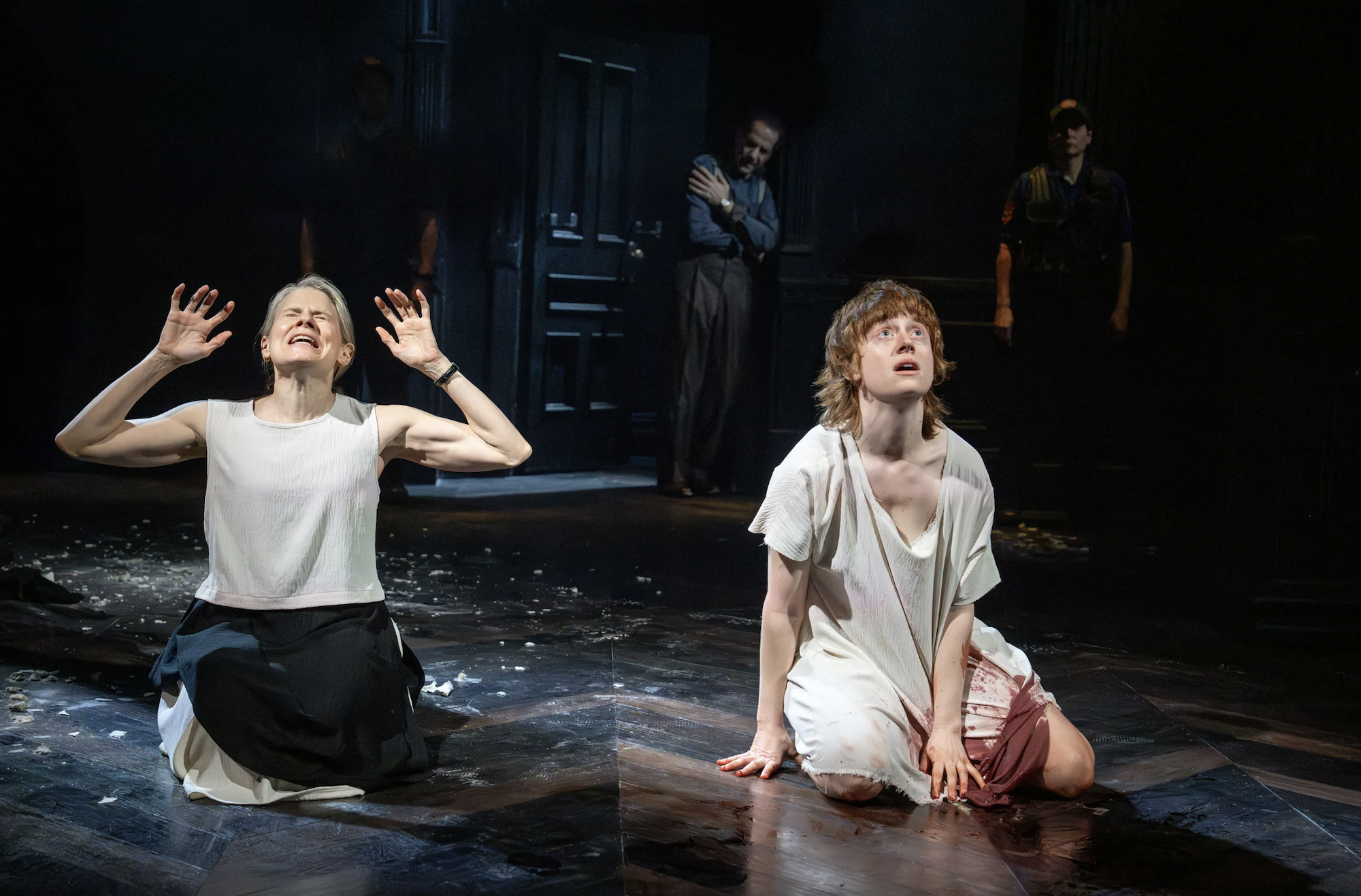
Playwright Anna Ziegler reimagines Antigone for today with good intentions and mixed results. Antigone (This Play I Read in High School) maintains Antigone’s defiant spirit by positioning her in today’s reproductive rights debates. Instead of burying her brother, this Antigone (an always dependable Susannah Perkins) has gotten an abortion. Across the centuries, one penalty persists: death.
Don’t remember Antigone? Fret not. An earnest and impassioned Celia Keenan-Bolger is here as audience stand-in and narrator. As the Chorus, Keenan-Bolger discusses an unexpected pregnancy, relying on Antigone’s strength to offer wisdom. She finds it, but does the audience?
Playing by rules that no one quite understands
The play’s newly minted king, Creon (Tony Shalhoub), doesn’t want to rock the boat, which means playing by the rules, even if it means executing his niece, Antigone. Abortions are outlawed, but the politics surrounding this law are unclear. Dressed in Enver Chakartash’s costumes that are both contemporary and perennial, this Antigone takes place in murky times. That may be intentional—the story is wielded as an allegory—but that renders it shaky, and to compare it to today’s bodily autonomy injustices is an enticing but too facile leap.
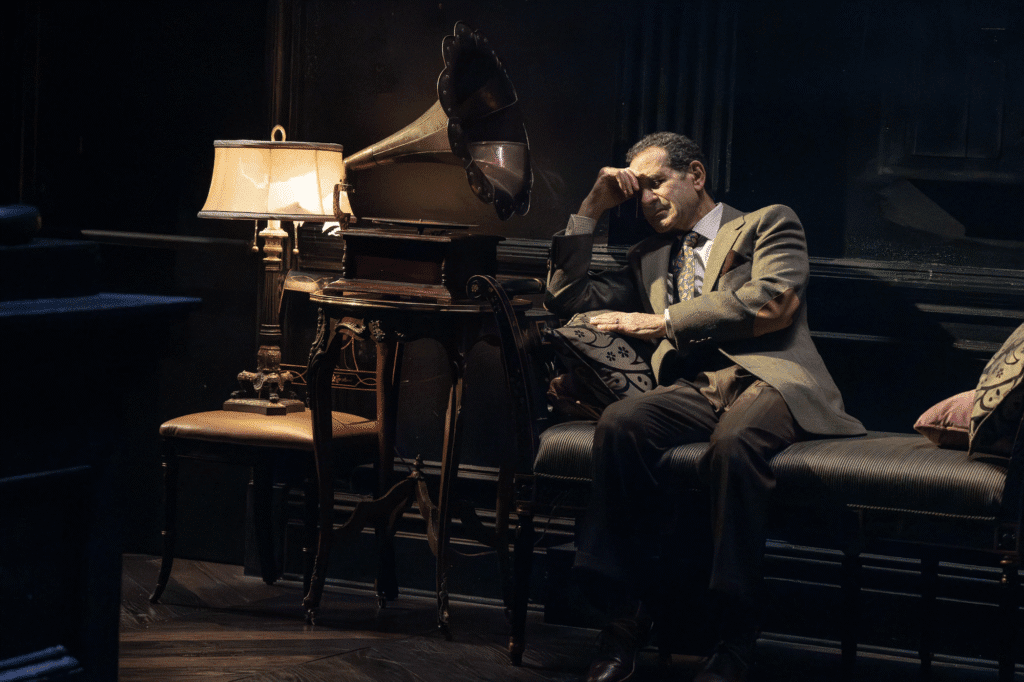
Arguments play as binaries, looping on themselves, though Perkins and Shalhoub keep them propulsive in director Tyne Rafaeli’s well-paced production. Antigone’s fiancé, Haemon, however, is underwritten, and his confrontation with his father, Creon, feels like an afterthought.
Some may be coming to this story for the first time, as with other recent Greek reimaginings, like the election-night adaptation of Oedipus or The Other Place, which dismantled Antigone through a fractured family’s house renovation. And they may find fire in this play’s credo.
In the audience the night I attended, a boy, maybe 12, sat watching the show, rapt. At one point, in the play’s most striking gesture, Antigone disrobes, sharing the history of her body—its comical bruises and human imperfections. The boy, bashful, turned away. Is this a body to fear or respect? Witness or unsee? Millennia later, we’re still asking.
Is ‘Antigone (This Play I Read in High School) worth seeing?
3 out of 5 stars

Antigone (This Play I Read in High School) explores reproductive rights through the lens of Greek tragedy. The cast mostly delivers, but the allegory wobbles.
- The Public Theater, 425 Lafayette St, New York City
- Notable performers: Celia Keenan-Bolger, Susannah Perkins, Tony Shalhoub
- Running time: Two hours and 15 minutes with one intermission
- Performances through April 5, 2026

It wants better content.
Have another minute?