

By Matthew Wexler
Out of 325 students in my graduating high school class, one was Black. Most of us were of European descent—1st- and 2nd-generation Italians, Germans, Polish, and so forth. Did my formative years play out like a scene from West Side Story? Not exactly, but it’s not black and white (no pun intended). As author Evelyn R. Carter, PhD, writes in her new book, Was That Racist?, “racial bias is bigger than the n-word.”
Following the Black Lives Matter movement in 2020, the pendulum has swung dramatically, with DEI initiatives on the chopping block in nearly every sector. The theater community, particularly Broadway, isn’t exempt.
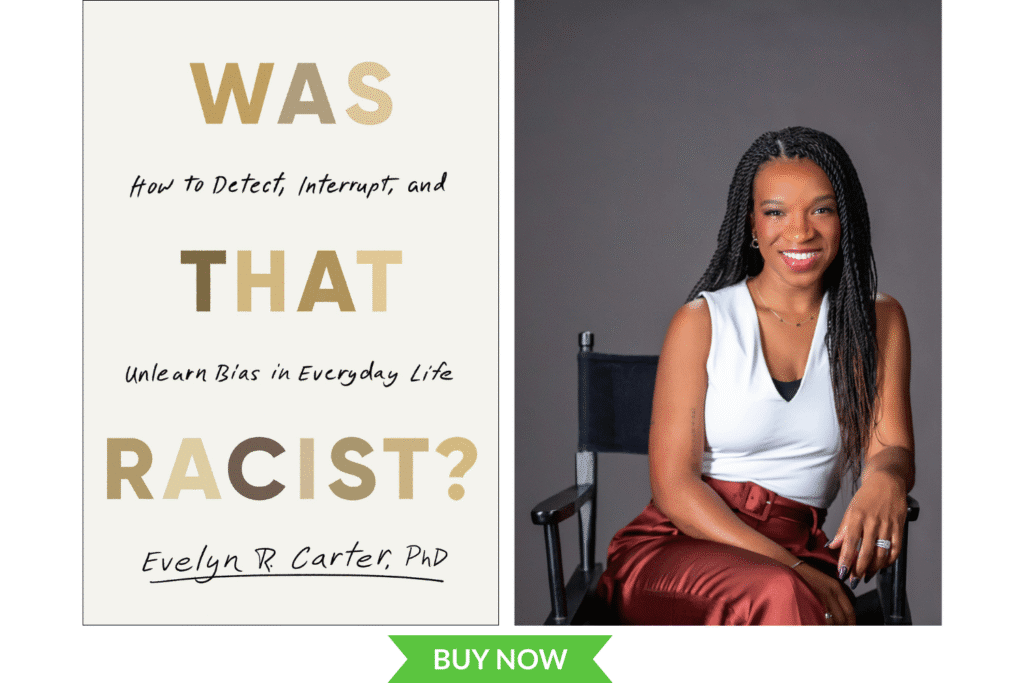
The Broadway League’s 2024-25 demographic report indicated only 5.4% of Broadway audiences were Black, and 11.6% were Latino, though the League indicates last year was the highest number of BIPOC theatergoers since the analysis began. For those of us interested in making the connection to arts and culture, Carter’s research and easy-to-follow narrative help contextualize the bigger picture, from theatermakers to audience marketing and engagement:
“I believe the distinction many White people draw between biased behavior and non-biased behavior is rooted in a desire to make intention (rather than impact) the distinguishing factor,” she writes.
When Broadway casting becomes a racial bias case study

After winning the six Tony Awards (including Best Musical), Maybe Happy Ending’s producers cast Andrew Barth Feldman for a limited time in a role originated by Asian American actor Darren Criss. A backlash ensued, and like most things in the news cycle, most people moved on. Others committed to change, like actor Conrad Ricamora, who started a scholarship fund for Asian American male actors.
As Carter points out, “The problem with color blindness as a racial ideology is that it created a false narrative of the universality of the human experience.” In this case, the creators suggested racial universality given that the role is a robot, but many weren’t buying it. And when millions of dollars are on the line, unconscious systemic biases may come into play.
Regardless of your industry or relationships, Was That Racist? offers practical perspectives and solutions for how we view the world, as well as simple choices to maintain a growth mindset.
“As humans, our role is simply to do our best,” Carter writes, “learn from each experience, and evolve along the way.”
Fast facts: ‘Was That Racist?’
The conversations aren’t going anywhere. This book helps you show up for them.
- Was That Racist by Evelyn Carter, PhD. (Little, Brown Spark)
- Publish date: January 6, 2026
- 288 pages













Leave a Reply