

By Laura Zornosa
There’s a room in Chicago’s Museum of Contemporary Art (MCA) that’s unlike any other. Swaths of cerulean fabric hang from the ceiling, perforated so dappled light from overhead streams through. This is, for all intents and purposes, a sunlit underwater grotto. But then there’s the sound: crickets and frogs, an auditory jungle cocoon. I can’t be sure, but it feels like the temperature has crept up a couple of degrees, warm and humid in the midst of Chicago winter. My heart rate slows.
This immersive installation, “A Drexcyen Chronocommons (To win the war you fought it sideways),” is the heart of Firelei Báez’s eponymous exhibition at the MCA, on display through May 31. Tropical plants surround altars to two female figures, their skin iridescent like oil on asphalt: the exiled Haitian Queen Marie-Louise Coidavid and her daughter. The fabric overhead also evokes the tarps used as shelter after natural disasters, particularly in Haiti and the Dominican Republic.
A diaspora in collage
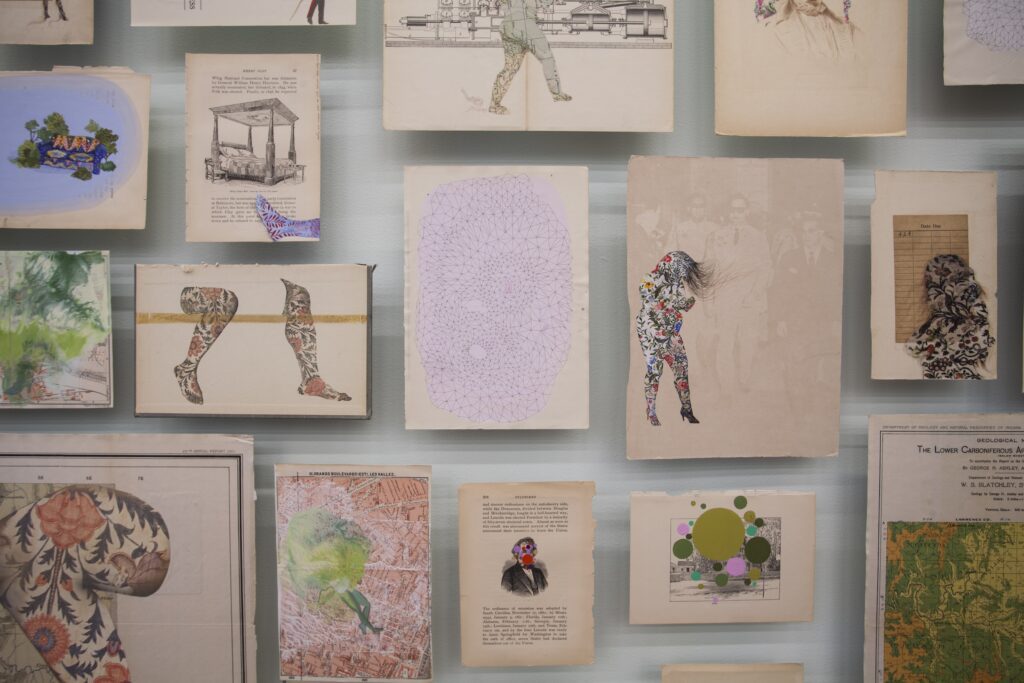
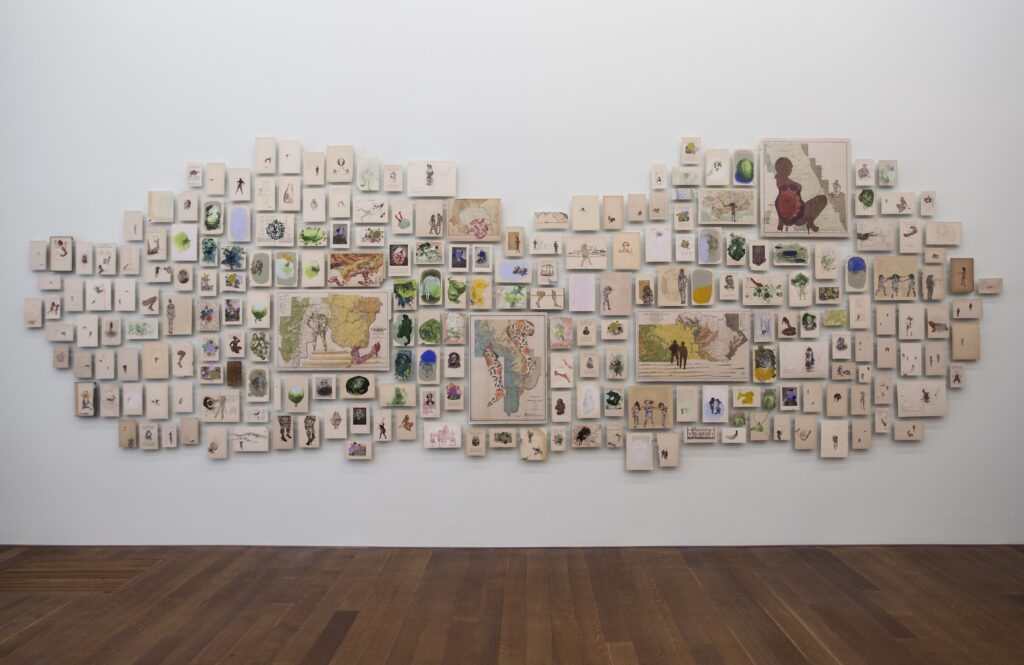
Báez was born in the Dominican Republic, but her work considers the history of the island of Hispaniola—now divided into two countries, Haiti and the Dominican Republic—as a whole. The title of “Man Without a Country (aka anthropophagist wading in the Artibonite River),” a mammoth work comprising 225 collaged book pages, references this directly. Many Haitians (and Dominicans of Haitian descent) are not guaranteed citizenship or its rights in the Dominican Republic.
Báez contemplates the legacies of colonial rule across the Americas and the African diaspora, in the Caribbean and beyond. “My works are speculative propositions,” her quote reads at the exhibition entrance, “meant to create alternate pasts and potential futures, questioning history and culture in order to provide a space for reassessing the present.”
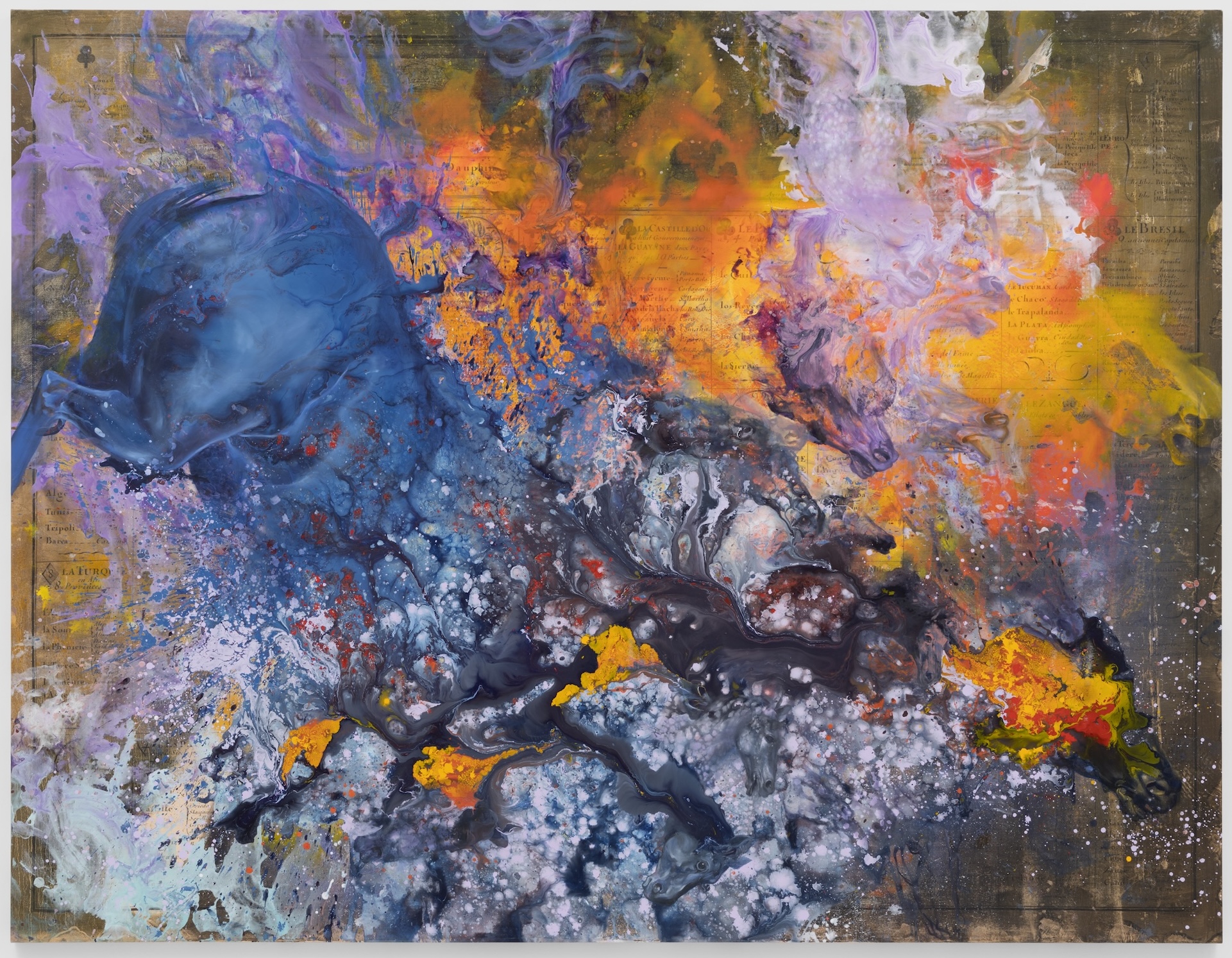
“A Drexcyen Chronocommons” brims with the iconography of Báez’s work: tignons, or knotted scarves used to cover the hair; West African indigo print patterns; chains; panthers, reminiscent of the Black Panther Party; hair picks; raised fists, recalling the Black Power fist. These symbols recur throughout this breathtaking exhibition, drawing its pieces—and its viewers—closer together.
Fast facts: Firelei Báez at MCA Chicago
Báez turns fabric, collage, and Caribbean and African iconography into a breathtaking display—proof that inherited stories aren’t written in stone.
- MCA Chicago, 220 East Chicago Avenue, Chicago
- Through May 31, 2026

It wants better content.
Find the best hotels in Chicago near the MCA
Have another minute?
Culture: From ‘Wicked’ to ‘West Side Story’: Paul Tazewell proves costume design is fine art
Off-Broadway: ‘Data’ asks the AI question Silicon Valley refuses to answer
Book Review: Marc Shaiman’s tell-most memoir isn’t afraid to name names












Leave a Reply