
By Matthew Wexler
French Riviera Week:
Your guide to the Côte d’Azur‘s cultural treasures
What’s that smell? Could it be rose, jasmine, or lavender? If you’re picking up musk, maybe it’s Civet, once sourced from the wild animal of the same name (now produced synthetically). Discover perfume’s origin story and production methods, along with an array of flacons and other paraphernalia dating back centuries, at the International Perfume Museum.
Located in Grasse, France, the epicenter of the world’s perfume industry and home to three of the most prestigious perfumeries—Fragonard, Galimard, and Molinard—the museum offers visitors a journey through the origins and production methods of the olfactory elixir.
Designed by architect Frédéric Jung, the museum spans 37,000 square feet, combining a 14th-century rampart with the former Hôtel Pontevès. The historical nods give shape to the museum’s collection, which reaches beyond famous releases like Chanel Nº5 and Habanita. The museum’s collection includes over 50,000 objects, but there’s one that perfume aficionados will lose their heads over.
What Marie Antoinette couldn’t leave behind
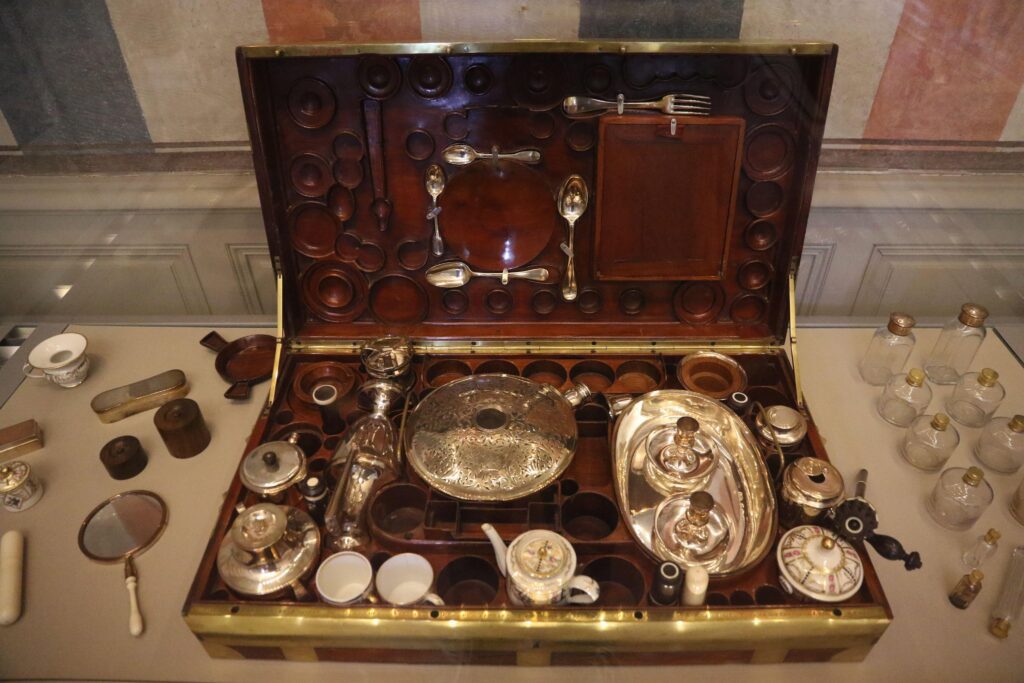
Among the museum’s collection is one particular artifact that stands apart: a traveling case that historians believe belonged to Marie Antoinette.
The then-queen and husband, Louis XVI, planned an escape to Varennes in 1791 as a last-ditch effort to strategize a counter initiative amid the French Revolution. But she couldn’t depart without an array of crystal, porcelain, and silver objects, including a tea service, vanity set, and custom-made perfumes. But sending it ahead would be a tell-tale sign of their escape.
Instead, she ordered a copy (and announced it publicly) as a gift for her sister in Brussels. If it weren’t for those pesky production delays! When the duplicate wasn’t ready in time, she sent the original to her sister instead and took the newly finished copy on the escape attempt.
The royal couple made it as far as Varennes before they were captured. And we all know how that turned out. The queen was eventually executed in 1793. The original case is now in the Louvre, but in 1985, French customs blocked the export of a strikingly similar version. The government helped Grasse’s International Perfume Museum acquire it—the very case Marie Antoinette likely clutched during her final bid for freedom, and perhaps the most poignant artifact in a collection spanning 4,000 years of fragrance history.

It wants better content.
Fast facts: The International Perfume Museum
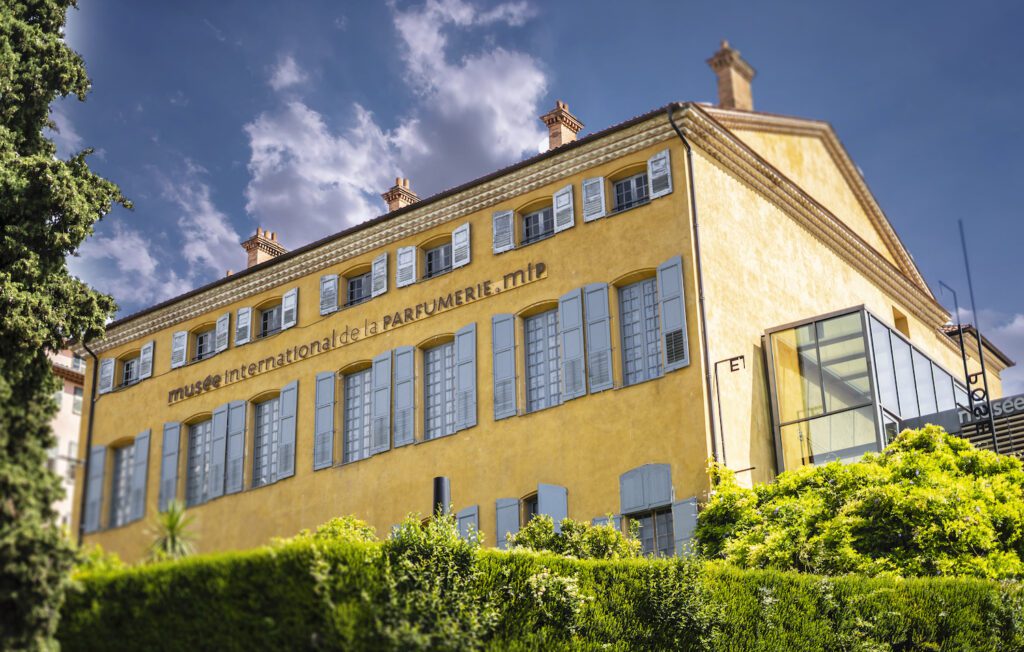
The International Perfume Museum offers 4,000 years of fragrance history, but it’s Marie Antoinette’s traveling case, clutched during her final bid for freedom, that lingers longest.
- 2 boulevard du Jeu de Ballon, Grasse
- Hours:
September 1 to June 30: 10 a.m. – 6 p.m. | July 1 to August 31: 10 a.m. – 7 p.m.
Closed the first Monday of January through March and October through December; closed Christmas Day and New Year’s Day.