
By Lauren Emily Whalen
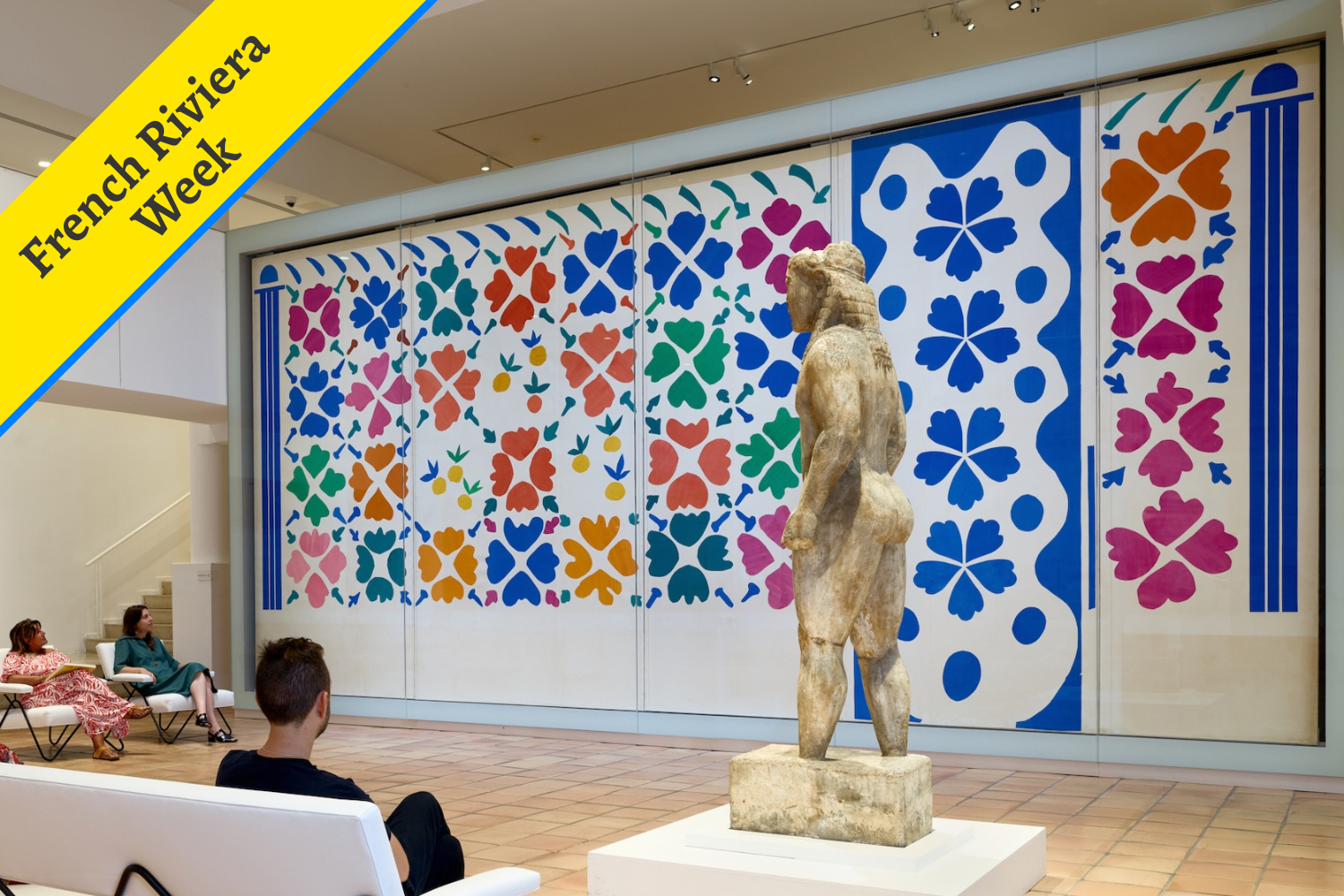
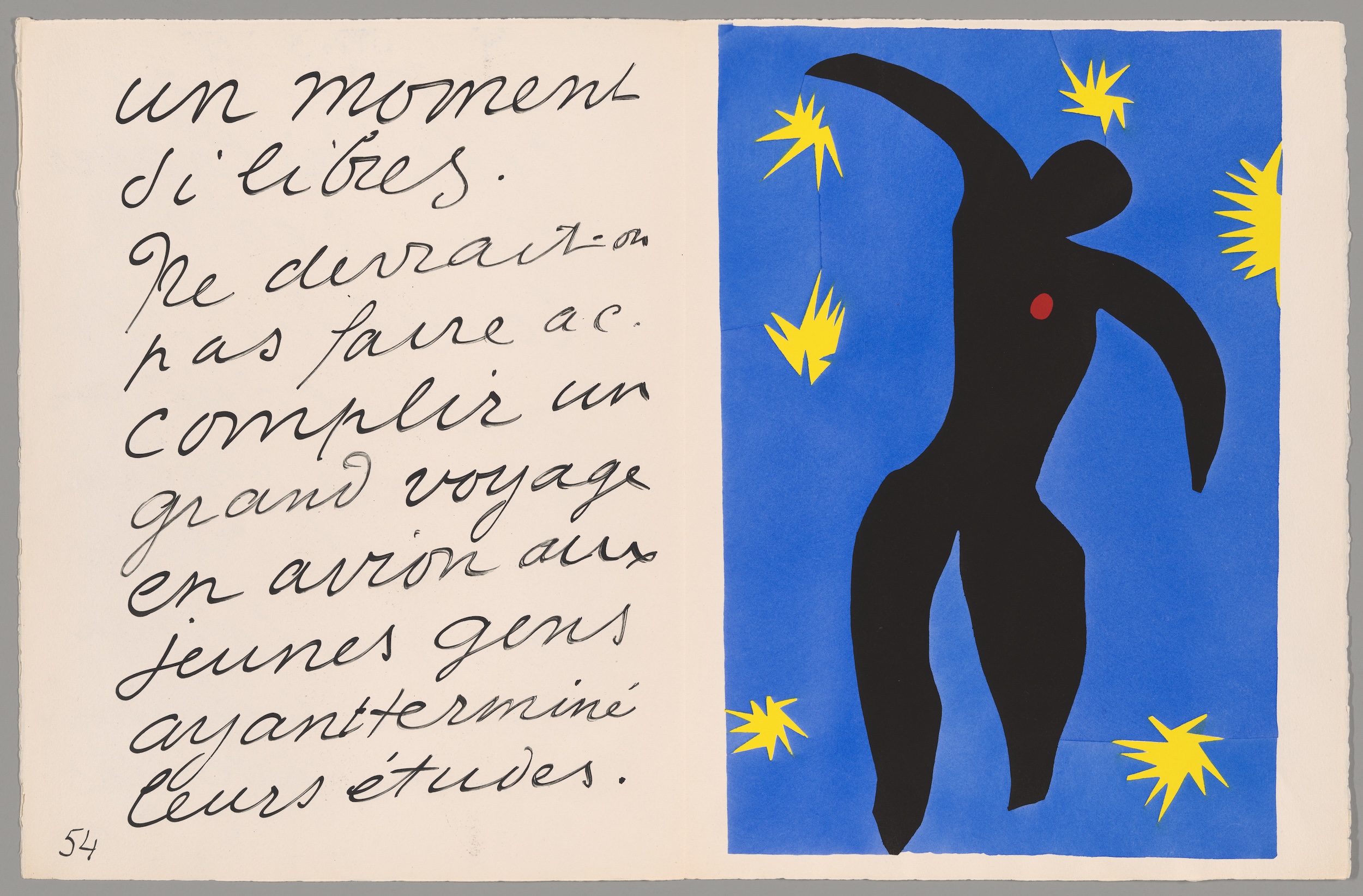
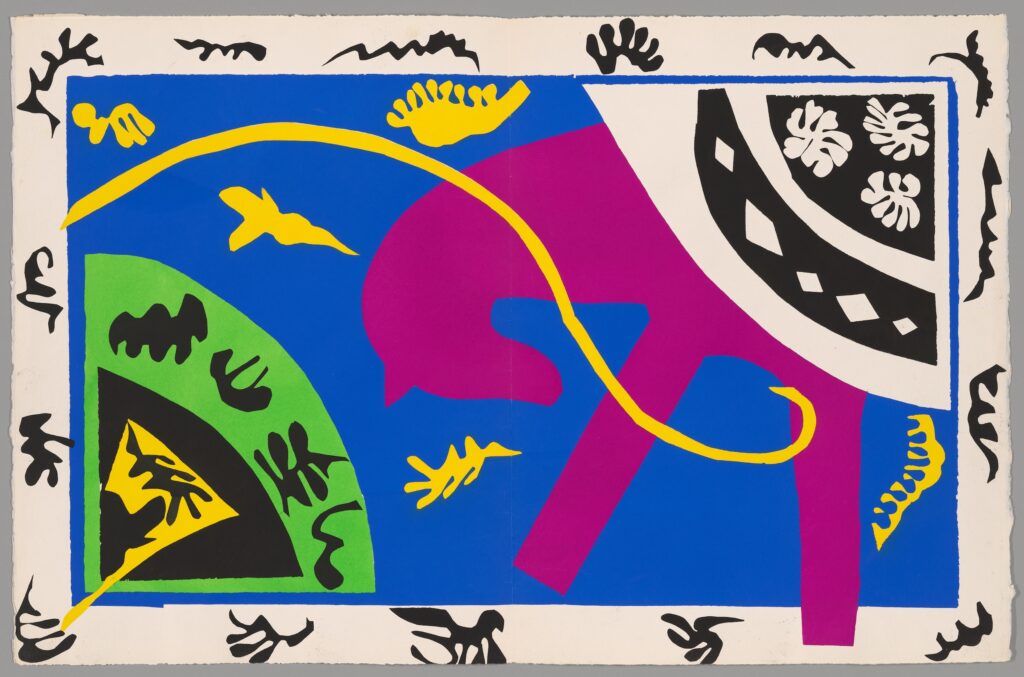
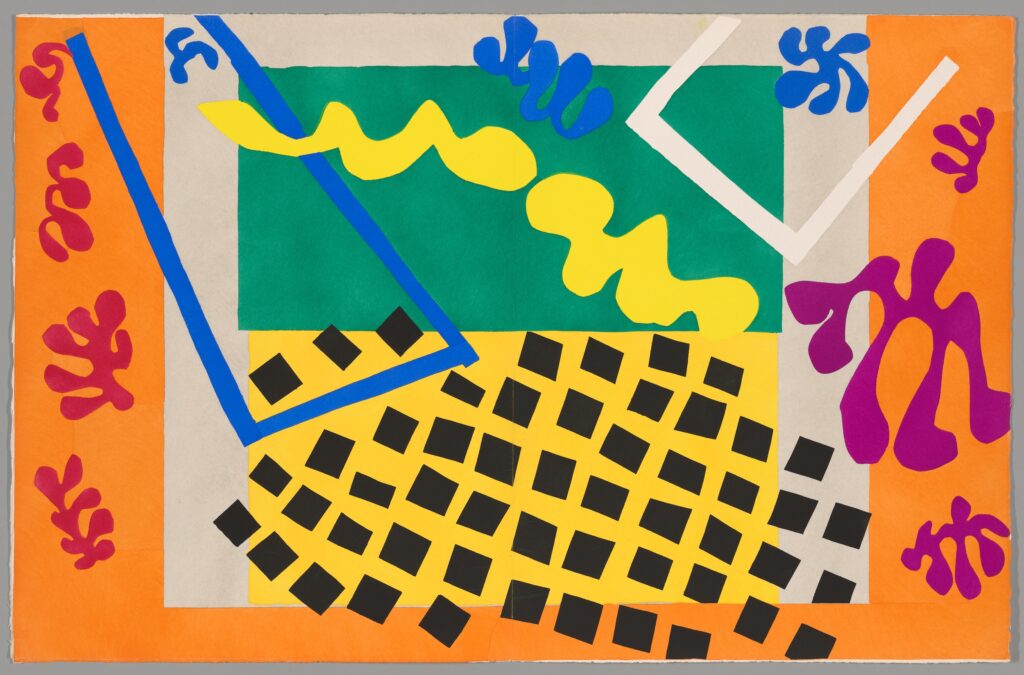
Henri Matisse was the master of the pivot. After an abdominal surgery rendered him bedridden, the legendary painter put down his palette and turned to paper. Matisse’s Jazz: Rhythms in Color spotlights this unique era in the artist’s career: commentary on the then-current rise of fascism in France during World War II through ebullient arrangements of colorful paper, which were eventually reproduced and bound to form Jazz, one of the most significant art books of the 20th century.
The latest featured exhibition at The Art Institute of Chicago incorporates these cut-paper artworks with over 50 of Matisse’s works from across the museum’s collection, including line and figure drawings. The result is a well-rounded “greatest hits” from the artist’s 50-year career, in which no line was underthought and no color out of place.
Color as quiet resistance
“I draw directly in color,” Matisse said of Jazz’s pieces. “It is not a starting point, it is a completion.” Matisse’s displayed cut-paper artwork includes one of his best-known images: Icarus features a figure rendered in black, dancing on a royal blue background with bursts of bright yellow. Though the effect is exuberant, Icarus and other works hint at Matisse’s “quiet resistance” of a darker reality: World War II and the Nazis’ occupation of his native France. Some art historians theorize that the yellow bursts symbolize not starlight, but artillery.
RELATED
For Matisse devotees, Nice is non-negotiable
“For Matisse, Jazz was unlike anything that came before it. The syncopation of his vibrantly colored abstractions and his incredibly personal text offers a glimpse into the artist’s evolution, and a peek at an artist at his most self-reflective and vulnerable,” said Emily Ziemba, director of curatorial administration and research curator, Prints and Drawings.
The darker subtext doesn’t need much translation in 2026.
Is ‘Matisse’s Jazz’ worth visiting?
Intimate in scale but enormous in impact, Matisse’s Jazz: Rhythms in Color presents an unforgettable demonstration of artistic resistance, where vibrant hues and chaotic lines symbolize both tyranny and hope.
- The Art Institute of Chicago, 111 S. Michigan Ave., Chicago
- Through June 1, 2026
- Know before you go: Tickets are separate from general museum admission. Entry is managed through a virtual line—join as soon as you arrive. Wait times typically run 30–90 minutes, but there’s plenty to explore in the permanent collection. Advance purchase is recommended.

It wants better content.
Have another minute for more art?
!["Devil Fish," 1972. Alec (Peter) Aliknak Banksland (Inuit [Ulukhaktok, Northwest Territories, Canada], 1928–1998). The Cleveland Museum of Art, The Harold T. Clark Educational Extension Fund.](https://1minutecritic.com/wp-content/uploads/2026/02/1972.1054-300x201.jpg)
Cleveland Museum of Art
Less talk, more gallery space: CMA shows what celebrating Indigenous artists actually looks like
Museum of Contemporary Art Chicago
Can fabric and collage dismantle colonial history? Firelei Báez makes a breathtaking case