
By Jude Cramer
The year was 2014. Several social issues felt on the brink of a breakthrough: America was just one year from the federal legalization of same-sex marriage, and white folks were finally starting to contend with the country’s pattern of violence against Black people after the killings of Michael Brown and Trayvon Martin. It’s a setting ripe for commentary, especially through a contemporary lens. Unfortunately, Our House, a new play by Barry Boehm, fumbles with half-baked analyses and stereotypes galore.
A bridge too far
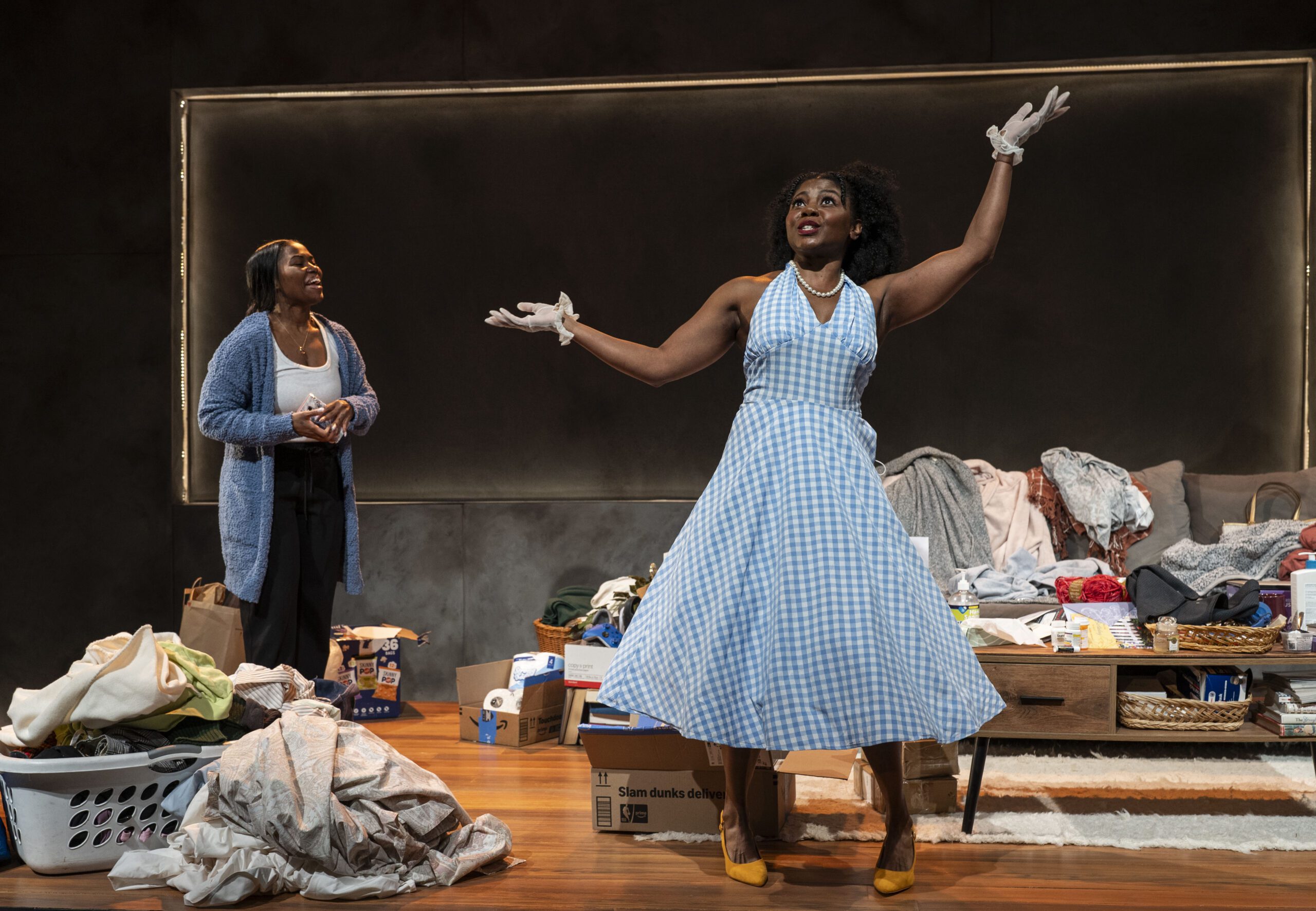
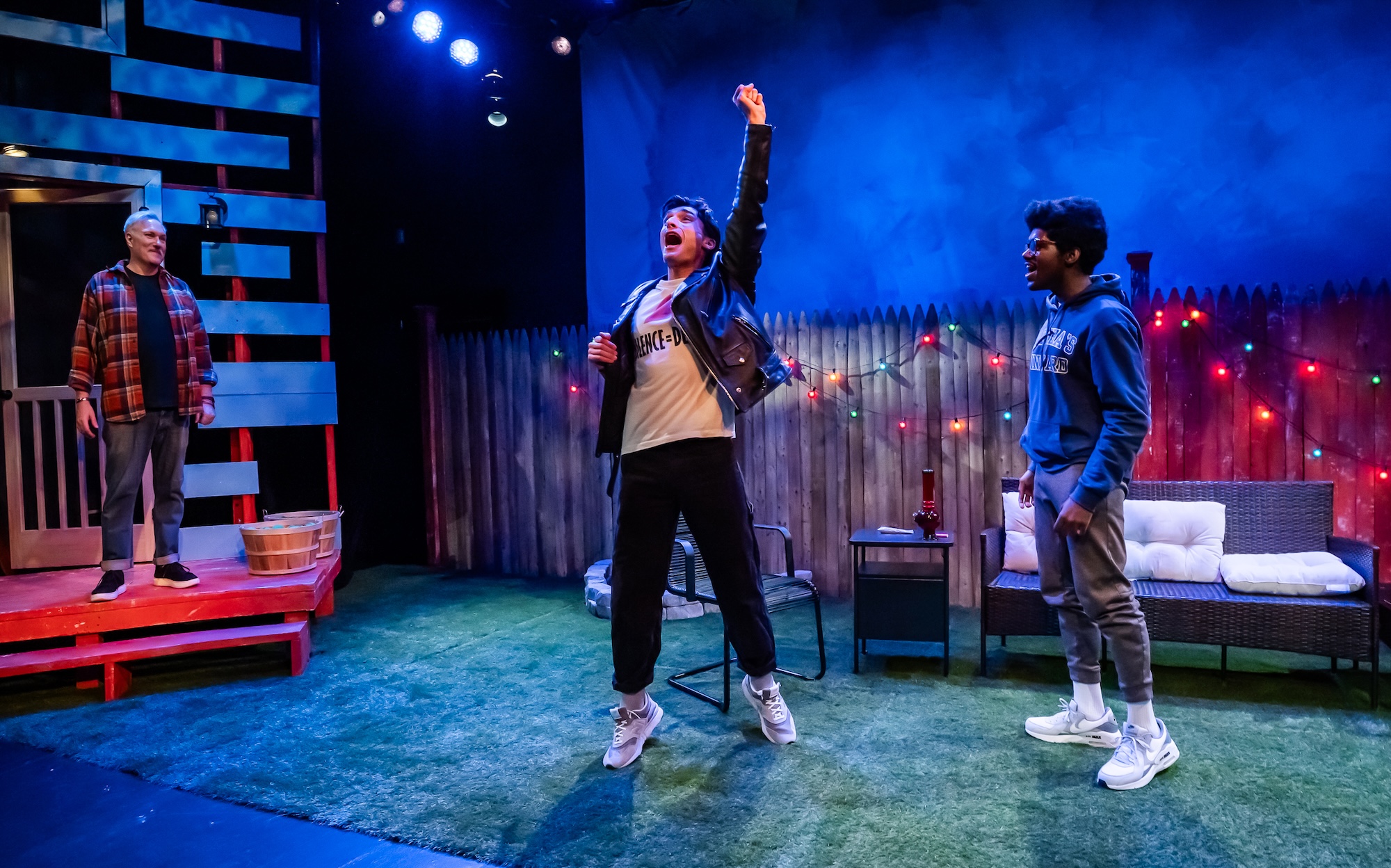
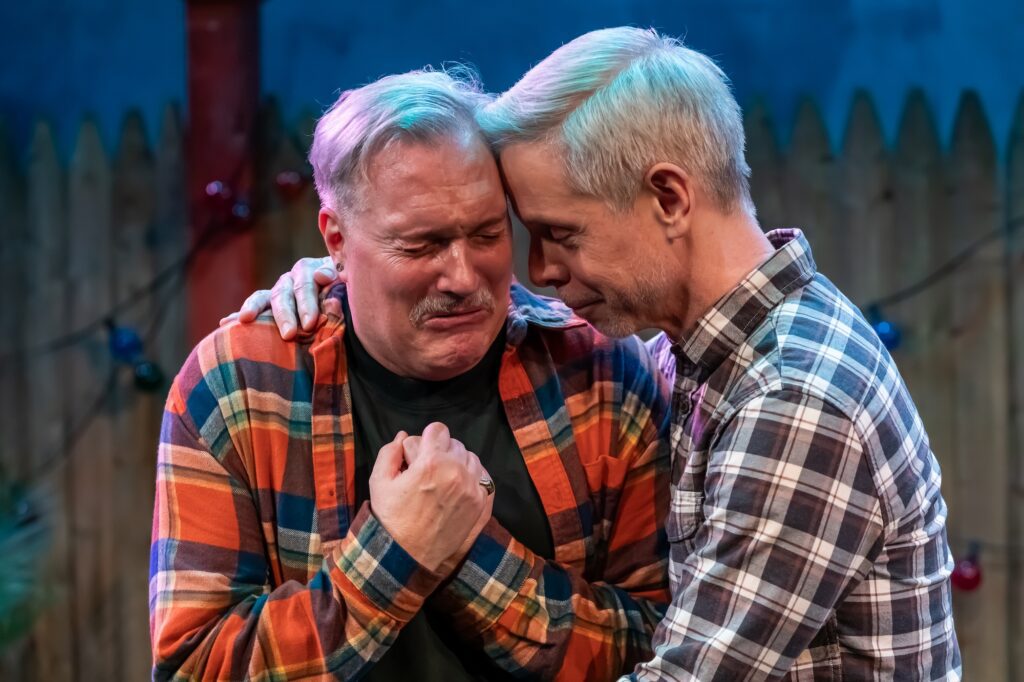
Our House, produced by LGBTQ+ theater company The Other Side of Silence, follows husbands Andy and Stanley as they host their nephew Brendan and his fiancée, Eugene, for their wedding. Marrying into an all-white family, Eugene, a Black man, must endure his new in-laws clumsily dancing around his race, from sex jokes to assumptions about his upbringing.
DISCOVER MORE OFF-BROADWAY
In ‘Bigfoot!’ everyone’s a little othered. Until one very hairy hero takes a giant leap for all of them
What begins as a nuanced portrayal of race relations between generations quickly defaults to clichés. When Eugene and Brendan go for a walk to a liquor store, they’re immediately put through the paces of Racism in America™. In quick succession, Eugene is called a slur, attacked in a hate crime, and has a gun pulled on him. The plot then shifts from what starts as a semi-successful comedy into a treatise on police brutality that no one in the room seems equipped to handle.
In a particularly confusing choice, Brendan outright repeats the N-word after it’s used against Eugene. Rightfully outraged, he tells Brendan that the word itself is violent and it hurts to hear it come from his white fiancée’s mouth. Ultimately, Boehm’s script struggles to find its balance, leaving both characters and the audience wishing they were in someone else’s house.
Is ‘Our House’ worth seeing?
1 out of 5 stars

Our House’s dated politics feel like a bug, not a feature, making the ensemble distinctly hard to root for.
- A.R.T./New York Theatres, 502 W 53rd St, New York City
- Running time: 1 hour and 45 minutes, with a 15-minute intermission
- Performances through March 21, 2026

It wants better content.