
I was 10 when my Sunday school teacher rolled out a projector, spooled a 16mm film, turned off the lights, and said, “Never forget.” Horrors of the Dachau concentration camp flickered across the concrete wall.
Few people have seen the other side. Germany’s camera boom had made snapshots a national pastime before the war, and Karl Höcker, top aide to Richard Baer, Auschwitz’s final commandant, kept an album of the SS staff’s last months at the camp. None of its 116 photos show prisoners. Many were shot at Solahütte, an SS retreat less than 20 miles away.
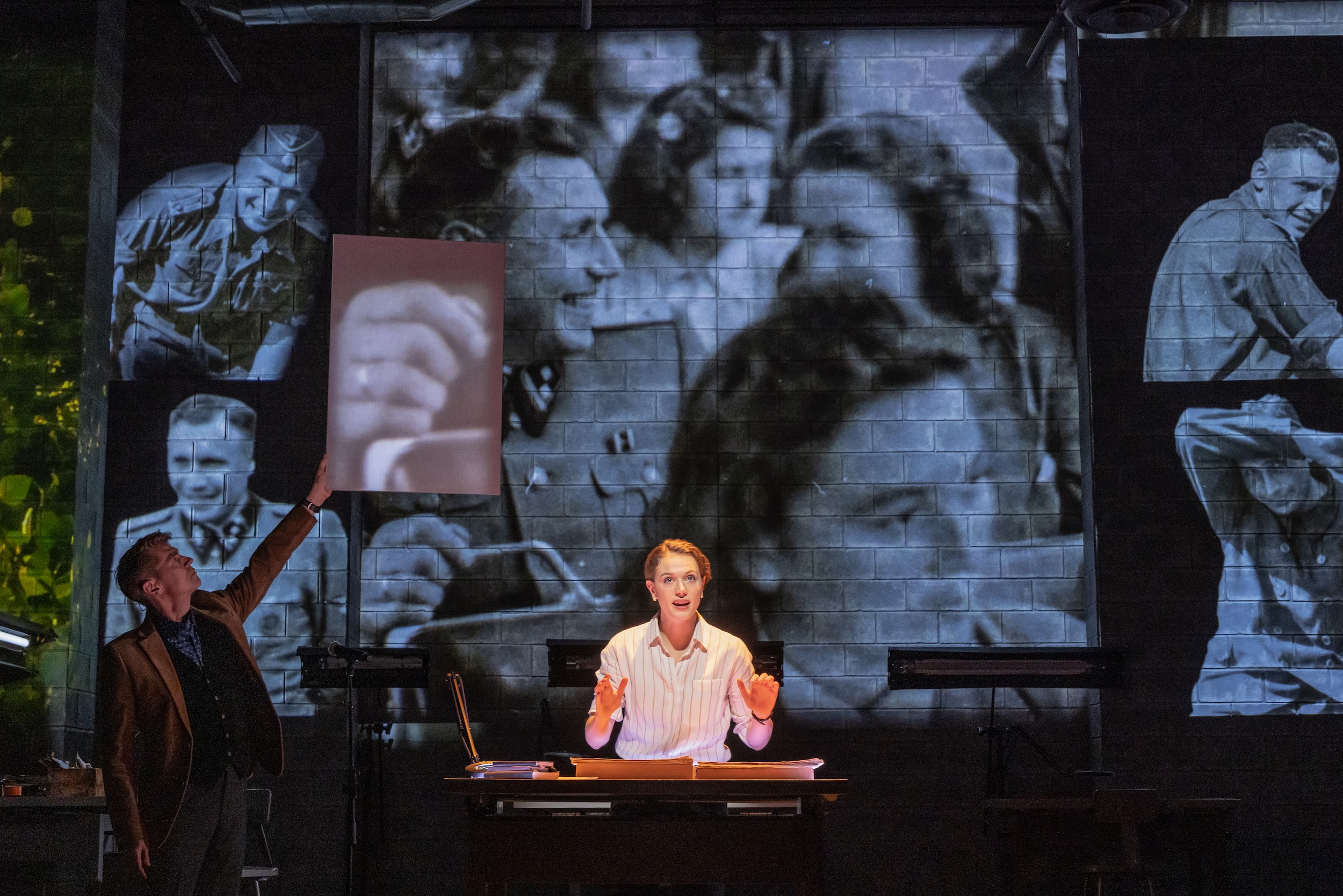
One spread contains six meticulously arranged photos under the caption “Hier gibt es Blaubeeren,” or “Here there are blueberries.” In them, Höcker passes out bowls of berries to young SS-Helferinnen, female auxiliaries on the camp’s communications staff.
The photo album that wasn’t supposed to survive
Moisés Kaufman and Amanda Gronich wrote Here There Are Blueberries with members of Tectonic Theater Project after the album was anonymously donated to the U.S. Holocaust Memorial Museum. The play premiered at La Jolla Playhouse in 2022, toured, and was a finalist for the 2024 Pulitzer Prize for Drama.
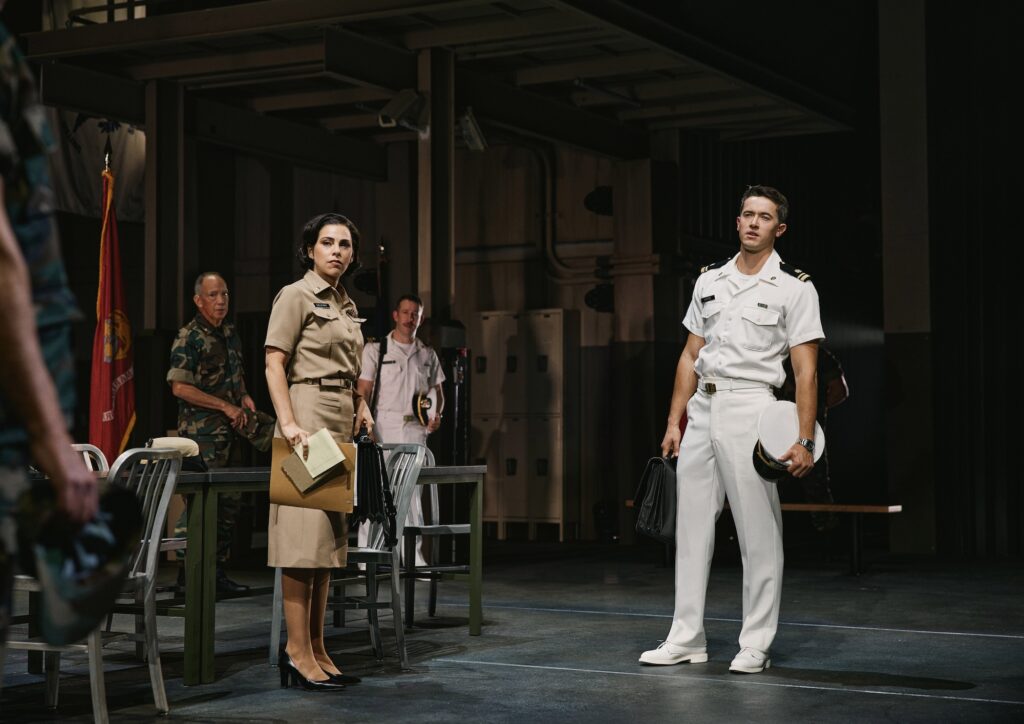
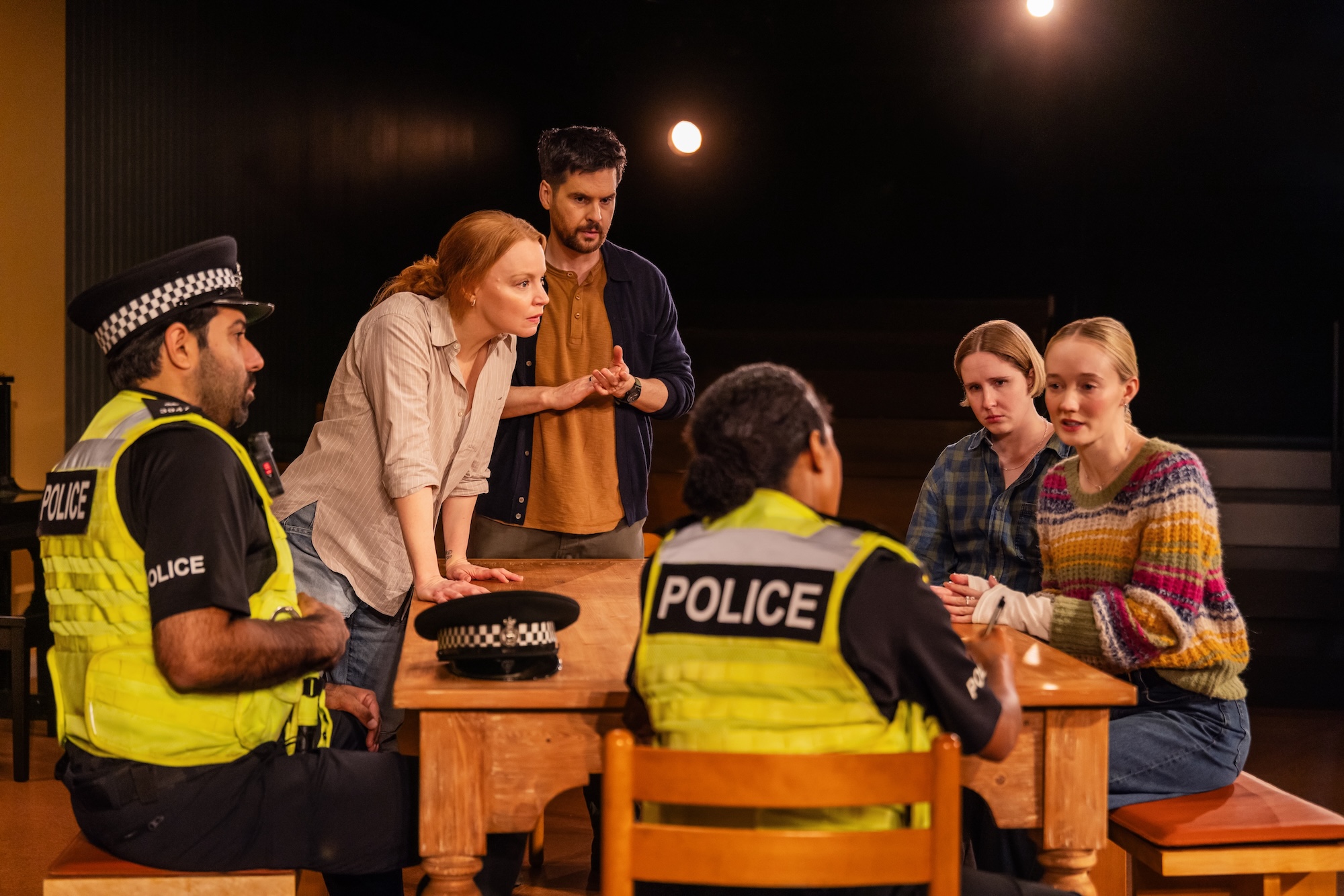
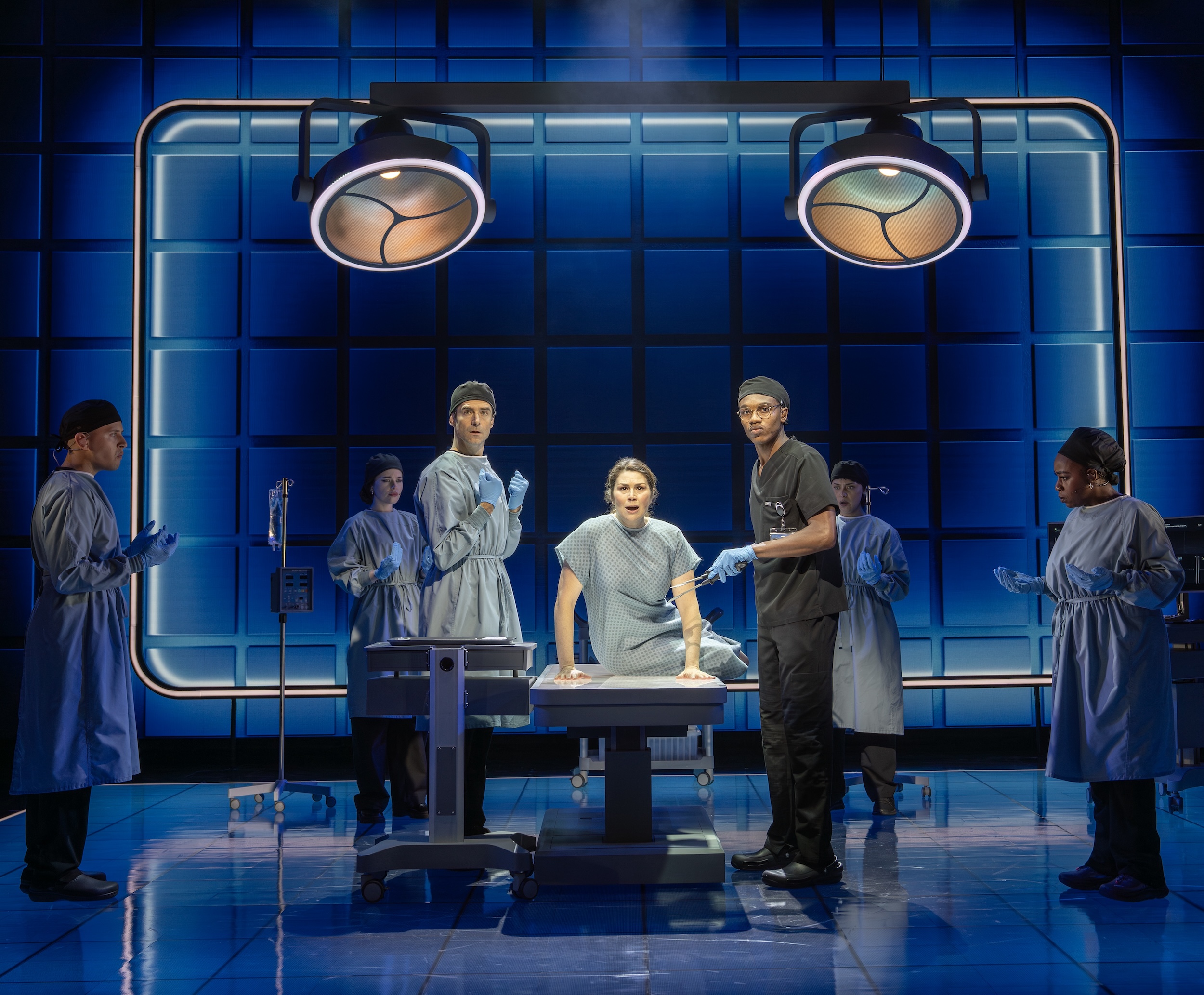
Original designers Derek McLane (scenic) and David Bengali (projections) return for the Broadway production, transforming the Barrymore stage into the museum’s basement archive. Bengali’s treatment of the images—close-ups, highlighted subjects, and cross-fades—unfolds the narrative in harrowing detail.
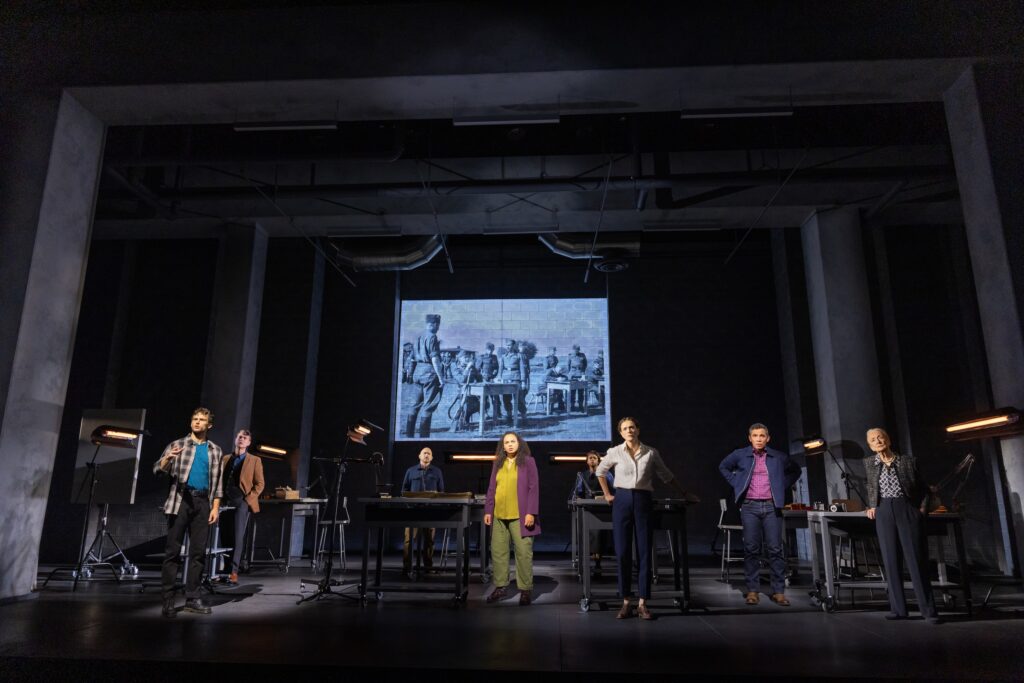
Delia Cunningham anchors the eight-person ensemble as archivist Rebecca Erbelding, who traces how the album’s smiling faces connect to the atrocities. “It’s very powerful to be able to see what we’re not supposed to see,” she says. “And we were not supposed to see this.”
Still, this isn’t a play rooted in heightened emotion or transformative character work. Instead, the ensemble, including stage vets Michael Cerveris and Kathleen Chalfant, shifts subtly among archivists, the people pictured, and their descendants, creating a live documentary.
More than 80 years after Soviet troops liberated Auschwitz, we still ask how it could happen. “For the Nazis, the whole process of killing people is about dividing responsibilities,” explains Holocaust historian Stefan Hördler. “Everybody is doing a small piece of it. So no one feels responsible for the whole act in total.”
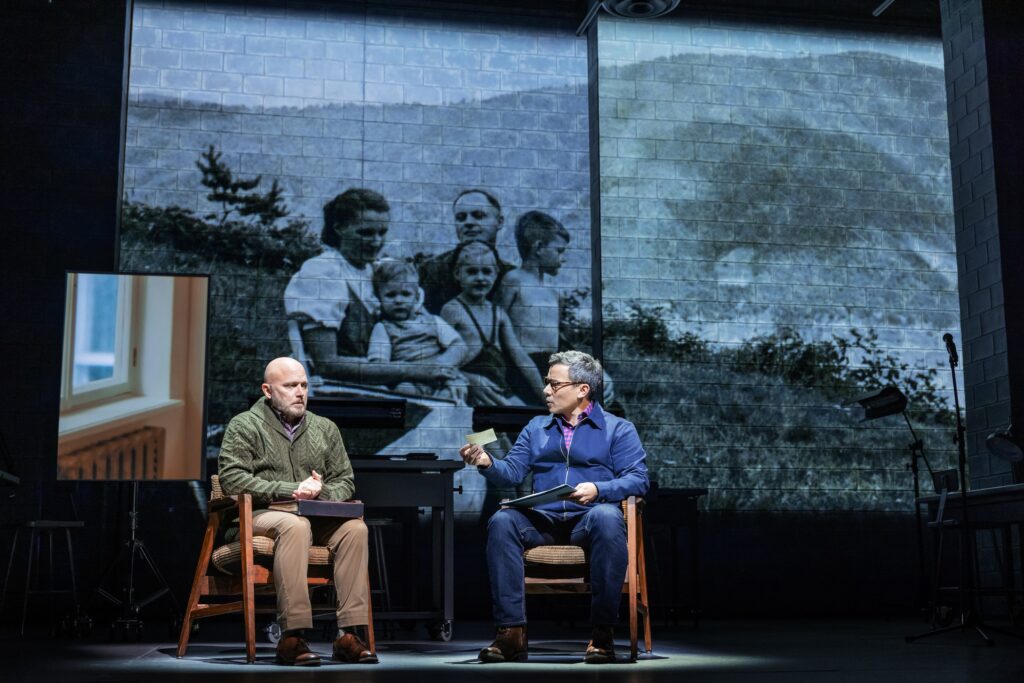
As for a central conflict, senior staff question whether such an album even belongs in a memorial museum, built for victims, not perpetrators. Rebecca’s answer: “This album belongs here. Six million people didn’t murder themselves.”
Despite its setting, Here There Are Blueberries isn’t a museum piece. My Sunday school teacher asked me never to forget. This play asks something harder: that we see what happened outside the frame, and who we’d be inside it.

It wants better content.
Is ‘Here There Are Blueberries’ worth seeing?

Restrained, precise, and built from real photographs, Here There Are Blueberries makes a gripping case that understanding the Holocaust means looking its perpetrators in the face.
- Barrymore Theatre, 243 W. 47th Street, New York City
- Notable performers: Delia Cunningham, Michael Cerveris, Kathleen Chalfant
- Running time: 90 minutes, no intermission
- Performances through Jan. 10, 2027
Have another minute?