
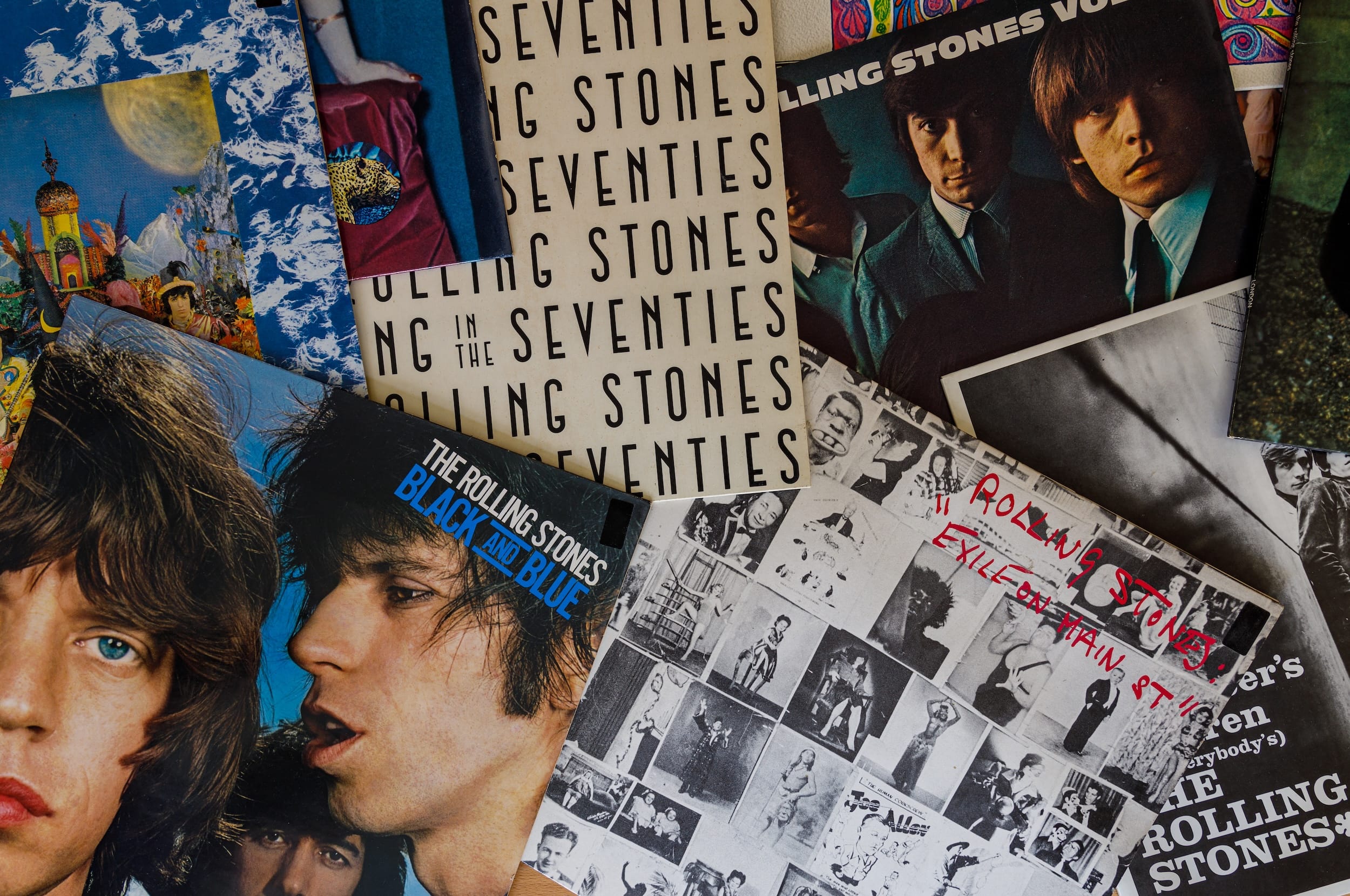
There’s no shortage of accounts on The Rolling Stones. Yet remarkably, author Bob Spitz has delivered what is arguably the most comprehensive chronicle of the British titans more than six decades after they formed. The Rolling Stones: The Biography opts for granularity by tracing the band’s unraveling with a journalist’s precision and a biographer’s patience.
Less a traditional narrative than a meticulously assembled timeline that pulls decades of scattered lore into sharp focus, the book’s power lies in its ability to recontextualize familiar myths through density and detail.
The infamous 1967 Redlands drug bust, for instance, is rendered not merely as a headline but as a slow-motion descent into absurdity. With exacting detail, Spitz unravels a beach excursion propelled by LSD, fanciful domestic scenes, and finally, the jarring intrusion of police into what had felt like a sealed psychedelic sanctuary. Spitz’s reconstruction underscores how precarious the group’s cultural dominance was, and how easily it could be punctured by the establishment they positioned themselves in contrast with.

It wants better content.
Equally revealing is a near-forgotten business flirtation between Mick Jagger and Paul McCartney of The Beatles. Spitz captures both the ambition and incompatibility of both parties: Jagger’s pragmatism clashing with the Fab Four’s freewheeling instincts. It’s a moment that illuminates how close the era’s two dominant forces came to convergence, and why they ultimately remained apart.
How Brian Jones lost the band he built
Original bandmate Brian Jones sits at the book’s emotional core, with Spitz detailing in unsparing clarity Jones’ paranoia, addiction, and growing estrangement from the group he founded. By the time Jones was fired, the decision felt both inevitable and deeply tragic. From financial settlements to rehearsed statements, the mechanics of his exit stand in sharp contrast to the private heartbreak Spitz writes about.
“They’re in there, making music, and they don’t want me,” Jones told a friend while lingering outside the studio one night in his Bentley after the band kicked him out in June 1969.
Publicly, though, The Rolling Stones let Jones position his departure. Jagger and Keith Richards continued to check on Jones, their concerns cutting through the frustration—a tension that defines this portrait of the band.
The result is a cultural excavation that reveals just how much was happening beneath the surface.
Fast facts: ‘The Rolling Stones: The Biography’
- The Rolling Stones: The Biography by Bob Spitz
- Published: April 21, 2026 (Penguin Press)
- 704 pages
Discover more books
In ‘Small Town Girls,’ Jayne Anne Phillips leaves West Virginia then writes her way back
New biographies bring Judy Blume and Toni Morrison down to earth
From Jay-Z to Springsteen: 5 musician memoirs & where to see them perform live