
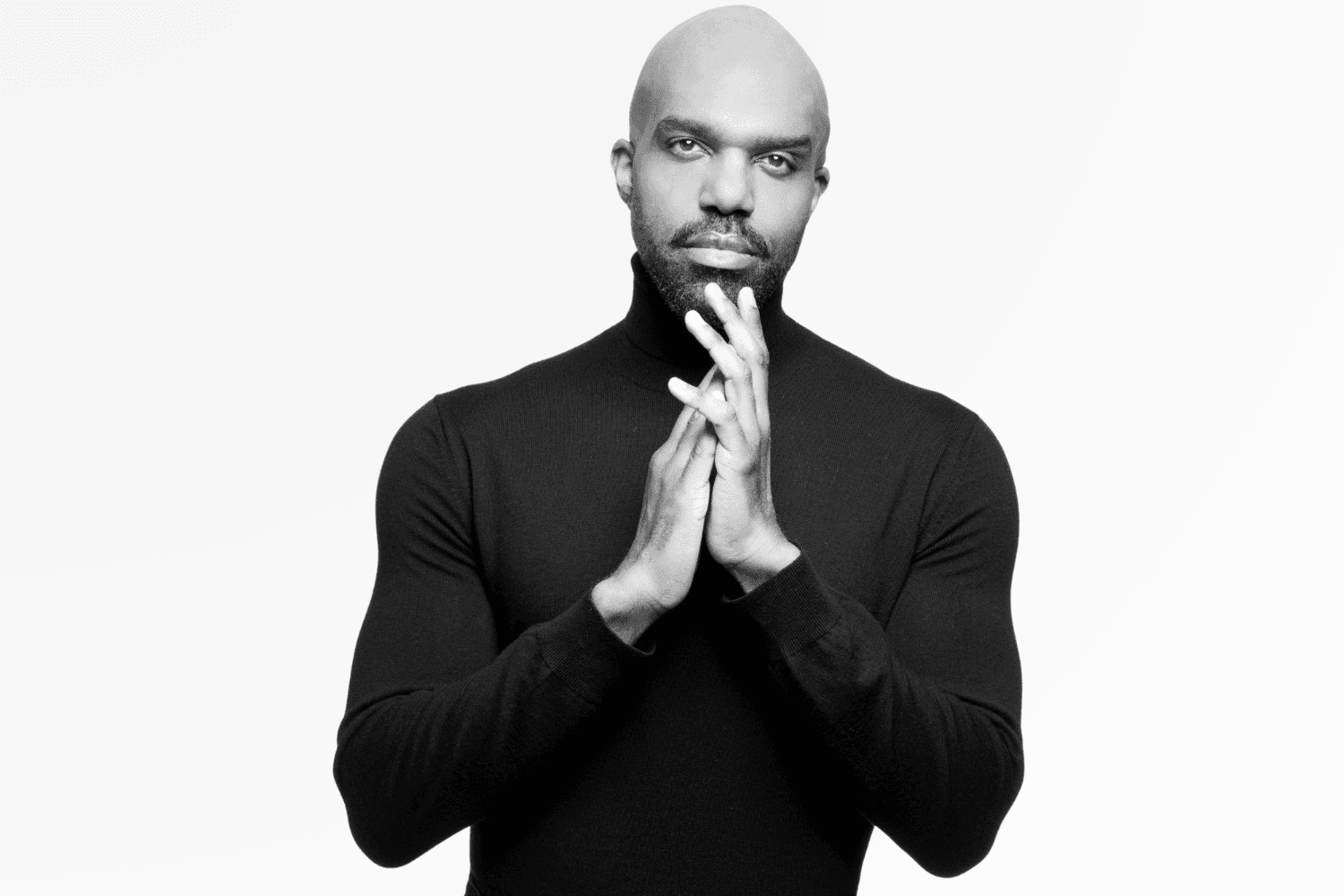
“The riffraff has arrived.” As travel writer Brooks Duncan, Carl Clemons-Hopkins enters a well-appointed Victorian home in The Balusters with audacious flair. But audiences soon discover that Brooks—like Clemons-Hopkins—has many layers.
Fresh off the final season of Hacks, Clemons-Hopkins makes their Broadway debut in David Lindsay-Abaire’s Tony-nominated play about an eclectic neighborhood association gathering that devolves into a multi-faceted racial reckoning.
“I love that he’s not in the room purely for entertainment, that he’s one of the more wealthy people in the community, even though he’s in the smallest house. He has dimensions to him,” Clemons-Hopkins tells 1 Minute Critic. A fixture in the theater scene for over 20 years, Clemons-Hopkins has appeared in both musicals and plays, including the Chicago company and first national tour of Hamilton. But they’ve always had an eye on Broadway.
“This is really a childhood dream come true, and now that I’m living that out, it gives me the courage to pursue other dreams,” says Clemons-Hopkins.
Welcome to Vernon Point
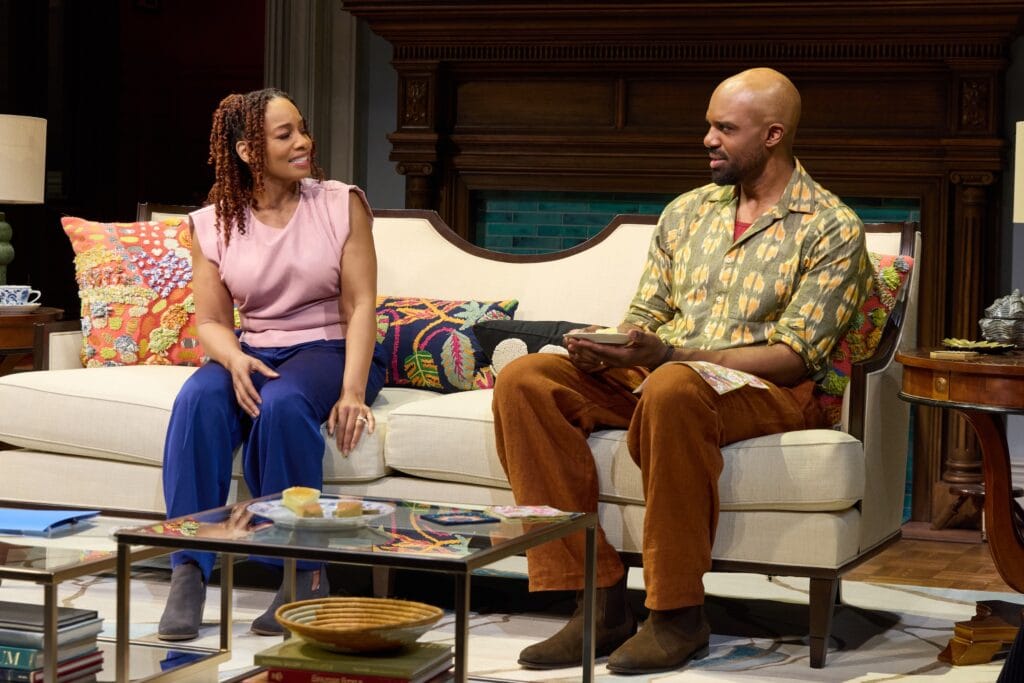
In The Balusters, Tony- and Pulitzer Prize-winning playwright David Lindsay-Abaire turns an upscale neighborhood association meeting into a sharp, fast-moving portrait of modern American racial dynamics. Set in the meticulously maintained landmarked enclave of Vernon Point, the play follows members whose debates over porch railings, trash can etiquette, and a proposed stop sign quickly spiral into battles over power, privilege, race, and class—ultimately questioning who gets to shape a community’s identity.
Directed by Kenny Leon (This World of Tomorrow), the comedy thrives on the collision between seemingly ordinary civic concerns and the deeply personal tensions simmering underneath them, transforming HOA politics into something both hilarious and uncomfortably recognizable.
“It’s such a unique and often humorous setting,” says Clemons-Hopkins, “but it also allows us to see what parts of ourselves we don’t like to see, and what parts of ourselves we can change.”

In the ensemble cast (which includes Broadway vets Anika Noni Rose and Richard Thomas), no one emerges entirely innocent. No one becomes a cartoon villain either. That’s part of the complexity that drew Clemons-Hopkins to the project. For years, they say, opportunities for Black queer performers have often fallen into narrow categories—stories centered on trauma, pain, or characters written primarily to provide emotional labor for someone else’s growth.
Brooks felt radically different. Wealthy, intelligent, sharp-tongued, and self-assured, the character exists in full dimension without lengthy exposition to explain his identity or reduce him to comic relief.
At one point, after an altercation at the neighborhood health food store, Brooks schools the meeting participants on different forms of microaggressions: “Following me through the store would be the Black thing. Judgy side-eye is the gay thing.” The joke lands, but it also stings with truth.
They describe The Balusters as a homecoming and right for the moment that we are living in.
“It was encouraging to me that this wasn’t a character who was here to simply service or buoy some protagonist,” says Clemons-Hopkins. “I love that this play is 10 people who are protagonists of their own story.”
In the room where it happens
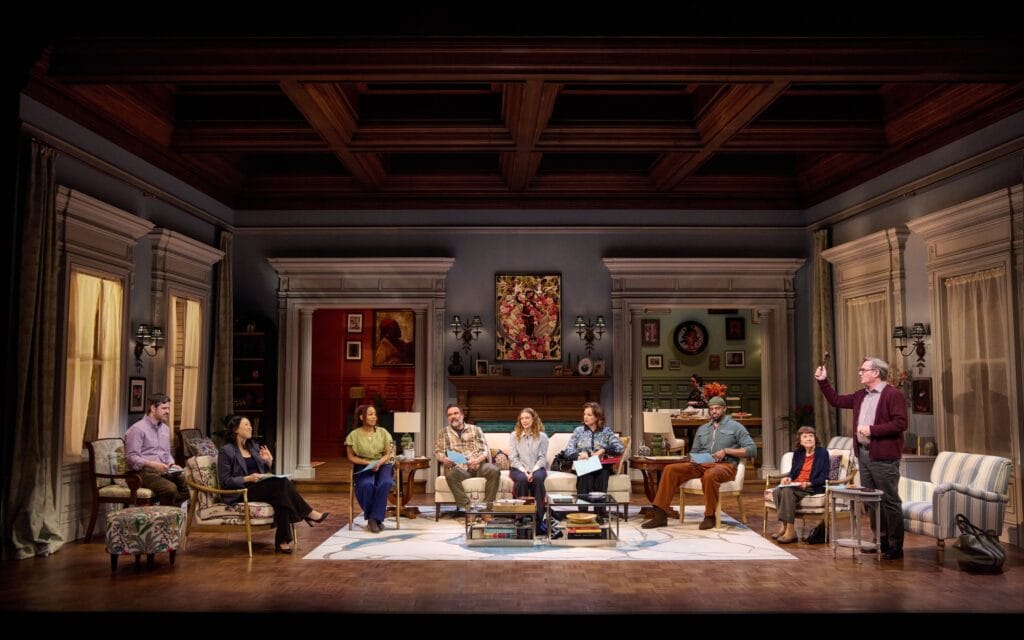
The Balusters, in many ways, mirrors the state of our country. What makes the play feel especially timely, though, is how little the play concerns itself with national politics, yet still feels deeply political.
A debate over historically correct balusters or a strategically placed stop sign becomes an analogy for a political climate in which coexistence itself can feel exhausting. Rather than offering easy moral victories, the play asks a more uncomfortable question: how do people continue sharing space when consensus no longer feels possible?
“To some extent, we all have to figure out how to still be neighbors,” says Clemons-Hopkins. “Something [our director] Kenny kept saying is, ‘These people still show up, they have to stay in the room, and they still show up the next month.’”
The Balusters, though full of laughs, offers a cutting commentary on America’s modern racial and socioeconomic landscape. While set in a fictitious East Coast community, real-life redistricting threatens to divide local communities further. Redistricting cases in Tennessee, Missouri, Alabama, and Virginia foreshadow what will likely be a tempestuous mid-term election cycle.
Similarly, The Balusters uses a neighborhood association’s procedure and preservation rules as stand-ins for broader American anxieties about demographic change, authority, class signaling, and cultural ownership.
“The play really allows us the opportunity to see parts of ourselves that we may not like, and it forces us to change,” says Clemons-Hopkins. “No one person is right as we debate over whether or not to have a stop sign placed on the street.”
From history-making ‘Hacks’ to Broadway debut
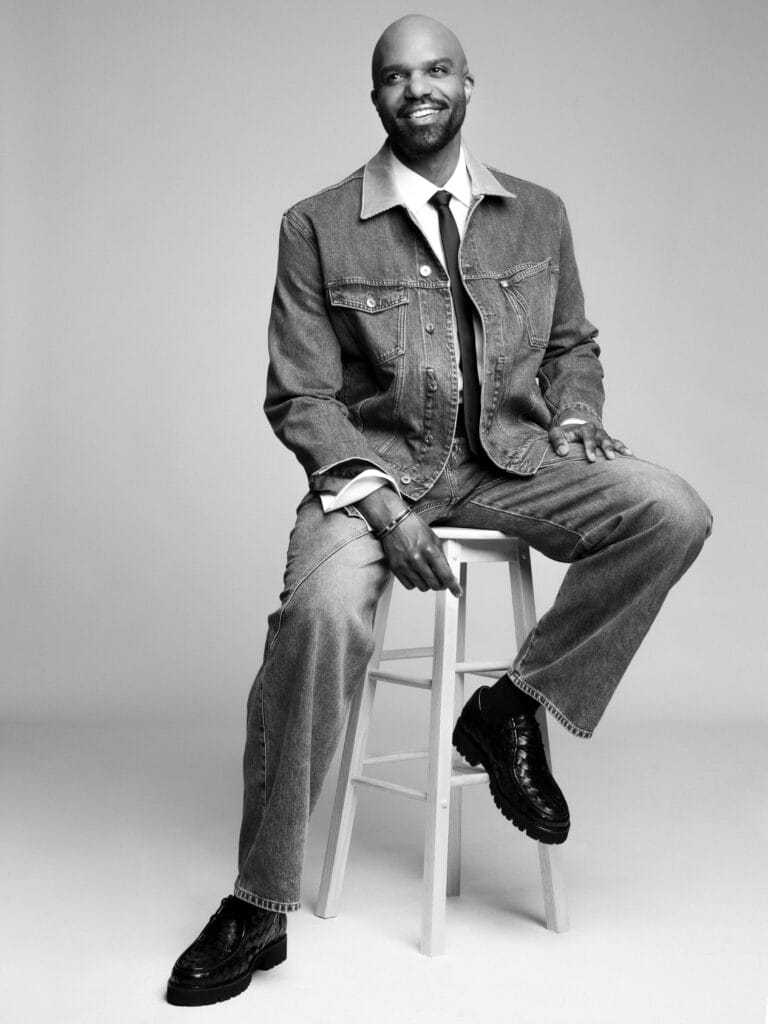
For an actor best known to television audiences as Marcus on HBO’s Hacks, Broadway arrives during a particularly transitional moment. The Emmy-winning series concludes after five seasons of defining visibility and career momentum for Clemons-Hopkins. In 2021, an Emmy nomination made them the first out, nonbinary actor to be nominated for a Primetime Emmy in an acting category.
Clemons-Hopkins says Marcus, the endlessly patient COO to Jean Smart’s Deborah Vance, taught them so much and became one of television’s most quietly beloved characters.
Where Marcus absorbs chaos calmly (“He’s a f*cking saint,” Clemons-Hopkins says), the actor possesses far less patience. Throughout the series, Marcus evolved from someone who found safety in stronger personalities—particularly Deborah (a powerhouse comedian) and echoes of his mother—into someone capable of building an identity independent of them. Clemons-Hopkins feels that the final season gives Marcus a satisfying emotional conclusion, saying, “He’s a very beautiful soul in the midst of a very wicked town.”
If Hacks amplified Clemons-Hopkins’ visibility, it also sharpened their confidence. They describe the experience as earning a “doctoral degree” in collaborative creativity—one that taught them not only about acting, but about speaking up. Throughout the series, they became more comfortable advocating for alternate line readings, costume decisions, and character choices rather than simply accepting every creative decision on the page. That growing confidence now arrives on Broadway with perfect timing, appearing in the most Tony-nominated new play of the season (tied with Liberation).
“This was a fantastic way to make my debut,” says Clemons-Hopkins. “It’s a play of no heroes, of no victims. You definitely see how more extreme behavior has more extreme consequences. For lack of a better term, everyone is guilty. Everyone has something on their hands. And actually, it’s just very human.”
The Balusters runs through June 21, 2026.
Photographer: Petros Kouiouris
Stylist: Altorrin
Makeup: Britty Whitfield
Have another minute?
Broadway – Every show from the 2025-26 Broadway season, reviewed
Books – Before ‘Cabaret,’ Liza Minnelli won a Tony for a flop. And she never forgot the lesson
Art – Fridamania: Why 2026 is Frida Kahlo’s biggest year yet