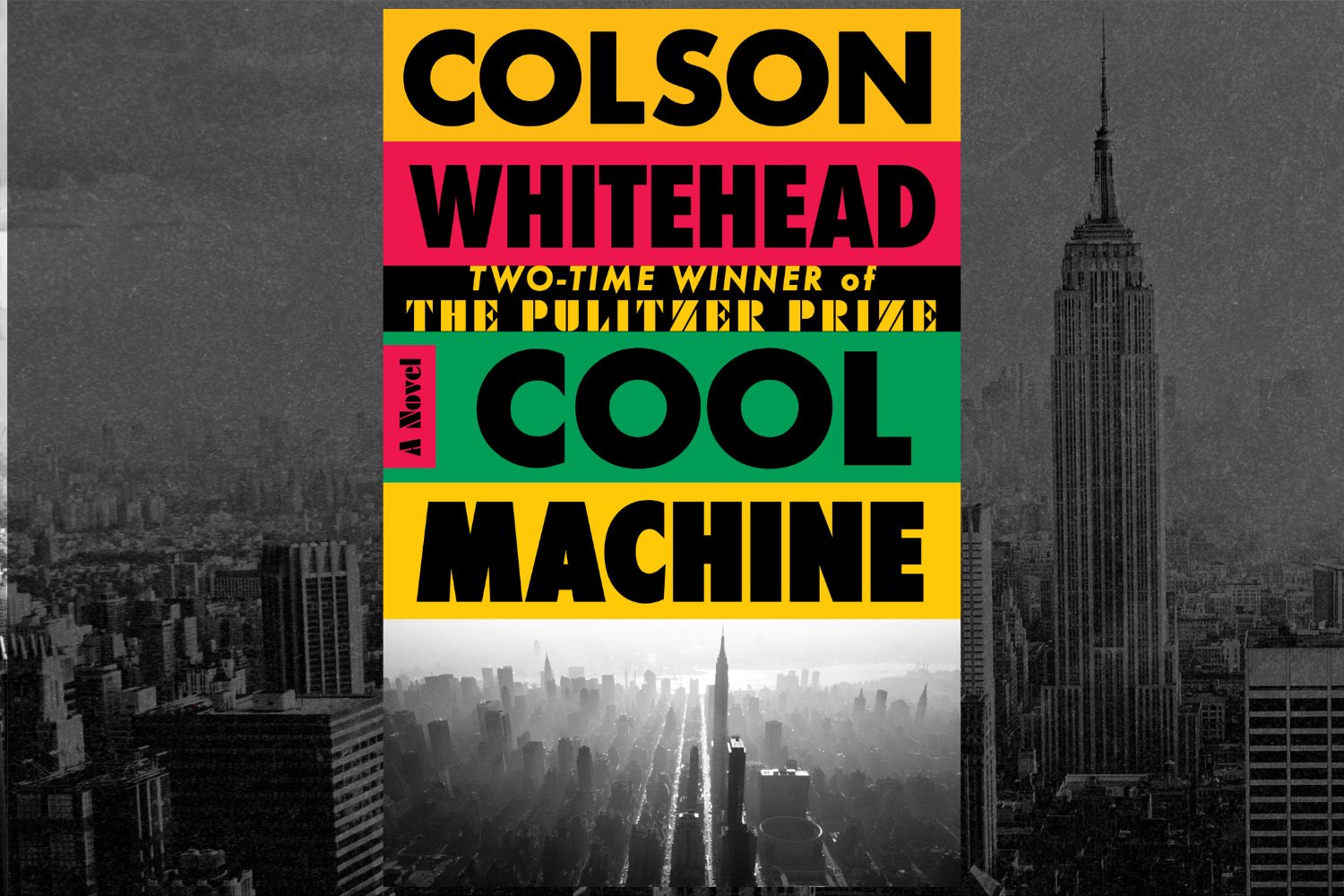
Colson Whitehead sets his intentions for his latest novel, Cool Machine, before the first word. The epigraph reads “For New York Fuckin’ City.” And he delivers, writing a gritty and evocative ode to this ugly and beautiful, tragic and miraculous urban playground.
The third installment in Whitehead’s Harlem Trilogy, Cool Machine stands on its own as both a nostalgic callback to the first half of the chaotic 1980s in New York City (many a Mayor Koch reference), and a timeless portrait of the city. Harlem, in particular, becomes a canvas upon which each of its inhabitants makes their own indelible mark.
Whitehead’s writing—poetic and transportive—brings New York City into vivid focus. At its center is protagonist Ray Carney. By all appearances, he’s the epitome of the American Dream. Carney owns a booming furniture store at the corner of 125th and Morningside Avenue. But in his shadow life, he consorts with thieves.

Where every heist asks who deserves the loot
Through back-alley midnight capers and Carney’s identity struggle between vigilante and honorable family man, Whitehead’s contemplative crook evokes a meta commentary on the commoditization of art, how it’s produced, and who deserves to be in possession of it.
Whether discussing the heists of a sought-after African mask or an Olympic gold medal won by Jesse Owens, the likable outlaws ruminate on why the objects have value.
Later, graffiti (the exemplar of the subjectivity of what counts as art and crime) arrives in Harlem via Daily Newz (an artist or vandal, depending on your perspective). “Uptown was wide open. The bigger the idea, the bigger the canvas,” writes Whitehead. “He had a big idea, and there was no bigger canvas than New York City.”
Whitehead also underscores this theme when discussing rap music’s evolution. Carney wonders, “Was it art from crime, or crime that became art?” before his son tells him, “It’s not stealing, it’s sampling. It’s how they make music these days.”
Perhaps Cool Machine is Whitehead’s own attempt to answer life’s big questions through his own art. Whether he discovered his answers or not, the philosophical crime novel/love story to New York City is a must-read of the summer, especially for New Yorkers who will recognize echoes of the past or new arrivals who will come to realize that while many things change, New York City’s creative heartbeat remains constant.
Fast facts: ‘Cool Machine by Colson Whitehead


Cool Machine closes the Harlem Trilogy on its sharpest question yet: who gets to own the things worth stealing?
- Cool Machine by Colson Whitehead
- Publish date: July 21, 2026 (Doubleday)
- 368 pages
Have another minute?
Books – In Ann Patchett’s ‘Whistler,’ a chance reunion never finds its footing
Theater – ‘Hair’ can still spark a revolution, and this Chicago revival proves it
Coming Soon – Dolly Parton’s new Broadway musical has us clocking in early, nerves and all

It wants better content.