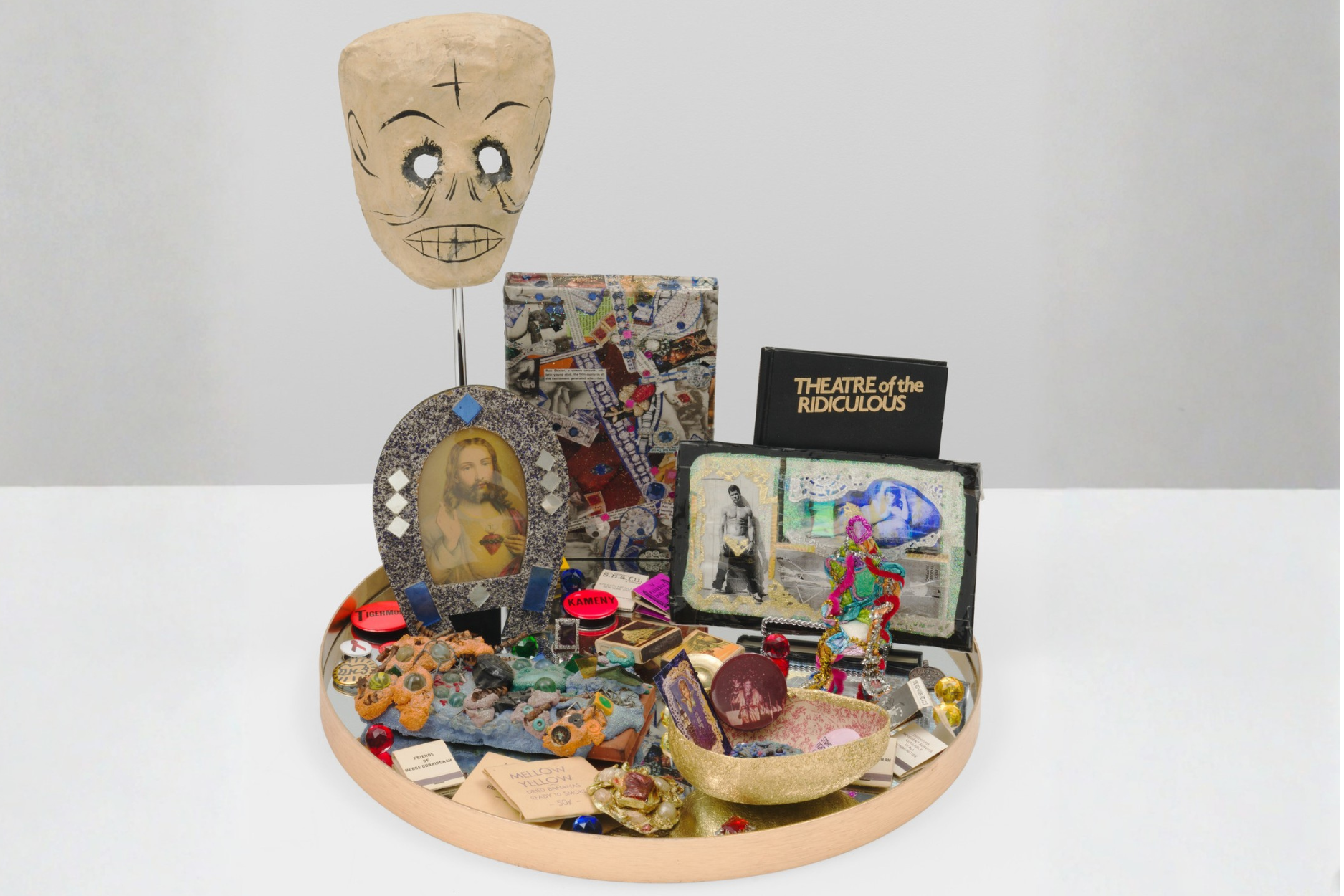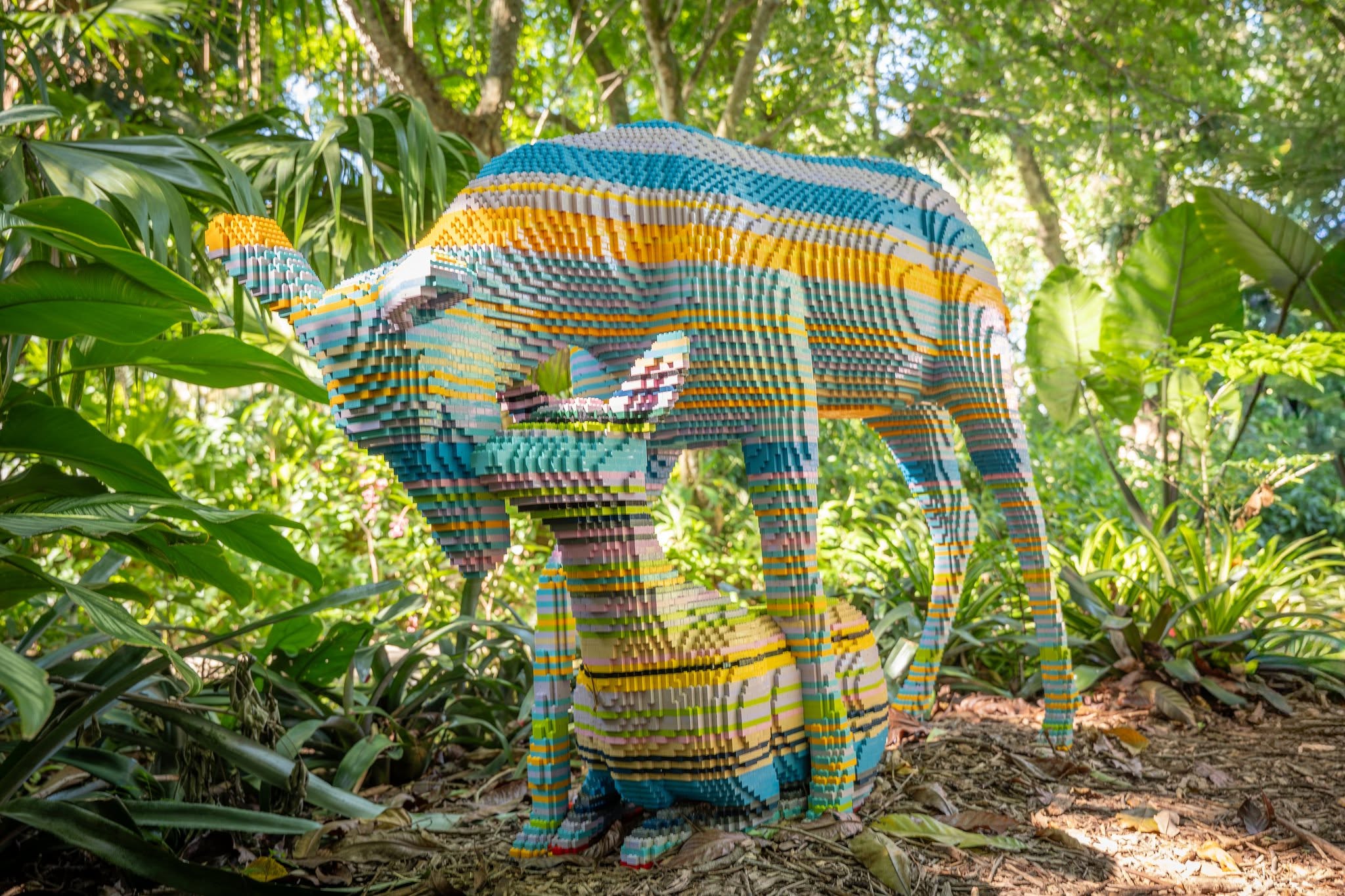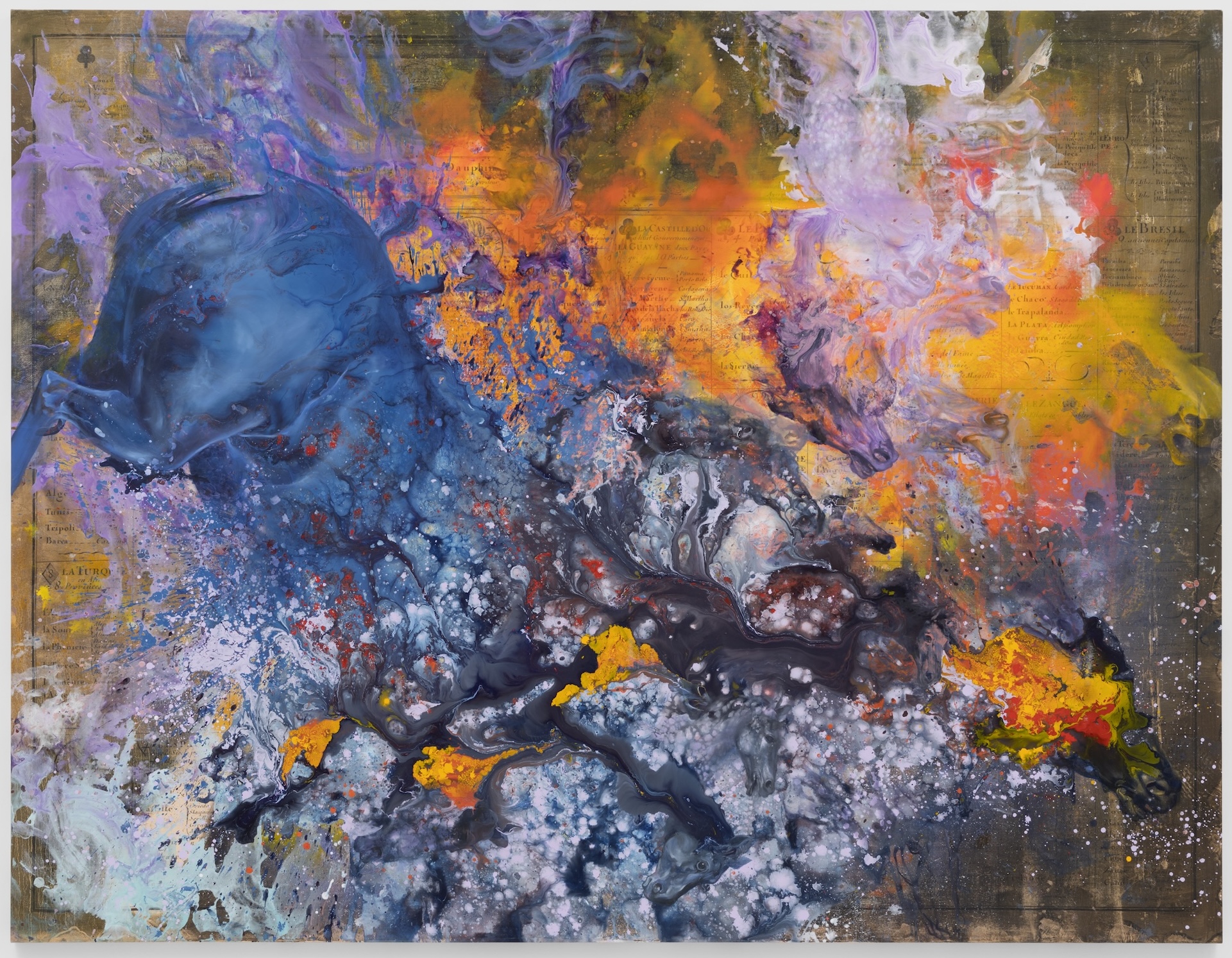

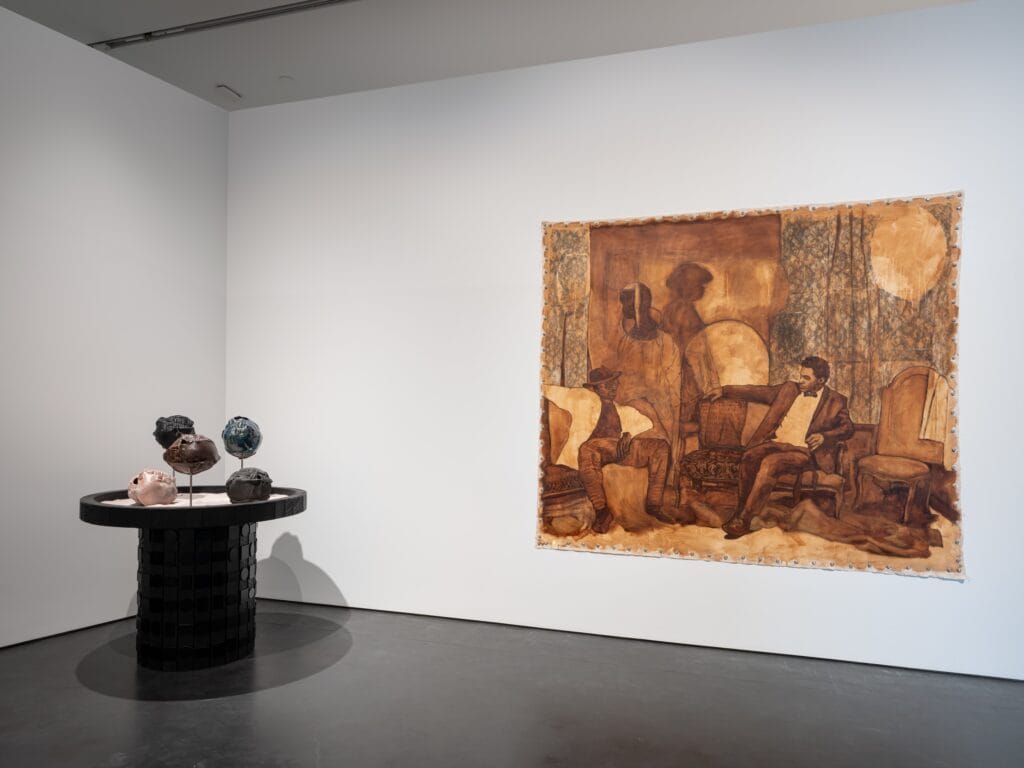
“I am hungrier more than ever to chase my ambitions,” artist London Pierre Williams shared on social media in response to inclusion in Studio Museum in Harlem’s new exhibit, Fade. His work, The Stage: He that leaves me blue, a dream (2026), juxtaposes queer masculine and feminine in a large-scale oil on canvas, framed with grommets and upholstery pins.
That kind of ambition fuels the sixth installment in the museum’s influential “F” series, which gathers 17 emerging Black and Afro-Latinx artists whose work circles themes of ancestry, spirituality, grief, and transformation. Fade feels less like a traditional group show and more like a conversation unfolding in real time—an extension of the museum’s ambitious first purpose-built home, which opened in November 2025.
For better or worse, Fade refuses to offer neat conclusions. Sculptures sag, shimmer, and distort; paintings and installations hover between memory and dream, asking viewers to sit with history rather than resolve it.
Where ‘Fade’ finds its footing
Entering the gallery, Antonio Darden’s Untitled (Reclining Figure) (2025) hovers overhead with an almost weightless presence, carrying a quiet devotional charge—a scaffold for the work that follows from artists including Chiffon Thomas, Jesús Hilario-Reyes, and Kiah Celeste, among others.
Rather than projecting a single curatorial thesis, Fade empowers the artists to move in and out of sync with one another, creating moments that feel intimate rather than orchestrated.
That looseness is both the exhibition’s strength and its challenge. Williams entrances with a second work, Travel tight and close; keep your brother in your hand. But others, such as Antonio Darden’s video in which R&B legend Luther Vandross appears and disappears in flashes, cutting across the screen like a transmission while singing a single clipped, interrupted note, feel less anchored.
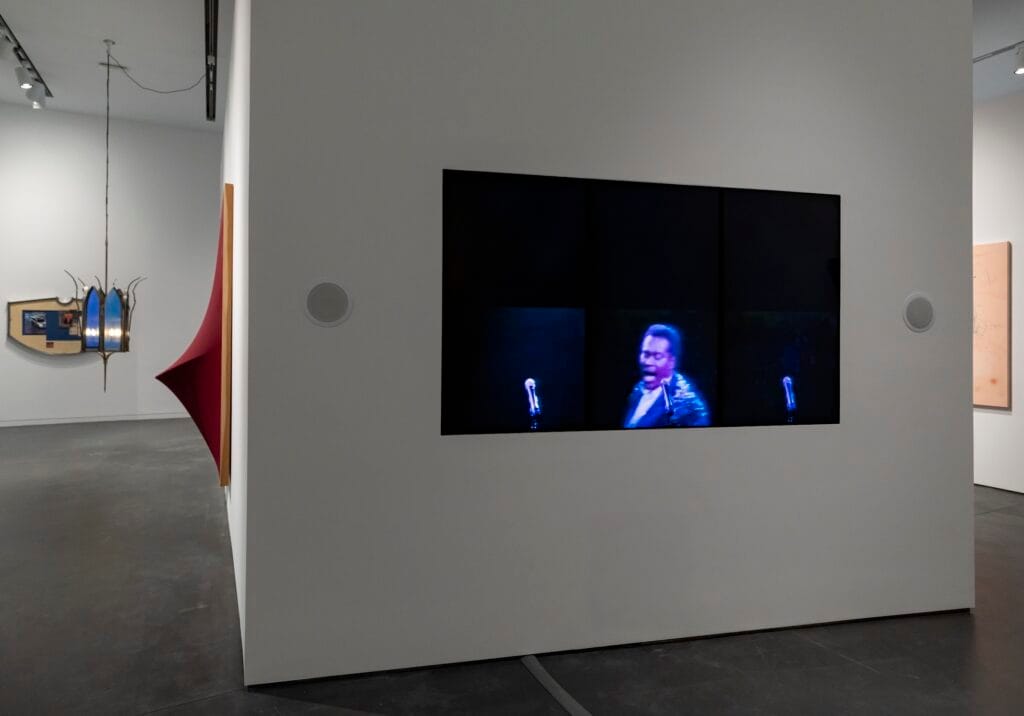
Museum in Harlem. Photo by Kris Graves.
There is very little spectacle here. Even the more visually striking pieces feel introspective, shaped by reflection instead of performance. In a moment when several contemporary exhibitions are tackling similar themes, like Beyond the Manosphere at The Stedelijk Museum Amsterdam, Fade feels refreshingly restrained.
The curators call the in-between “a space of resistance.” After 17 artists, you start to feel it. A few of them make you believe it.

It wants better content.
Fast facts: ‘Fade’ at Studio Museum in Harlem
Fade gathers 17 artists in Studio Museum in Harlem’s new home and asks them to hold the in-between. Most do, some don’t, and the ones that do are hard to shake.
- Studio Museum in Harlem, 144 West 125th Street, New York City
- Fade through September 6, 2026
- Admission: Adults $16, children and seniors $9, Studio Sundays free
Have another minute?
Art – Fridamania: Why 2026 is Frida Kahlo’s biggest year yet
Tony Awards – The 2025-26 Broadway season, reviewed
Music – DARA’s ‘Bangaranga’ won Eurovision. The word has been borrowed before, just not like this