
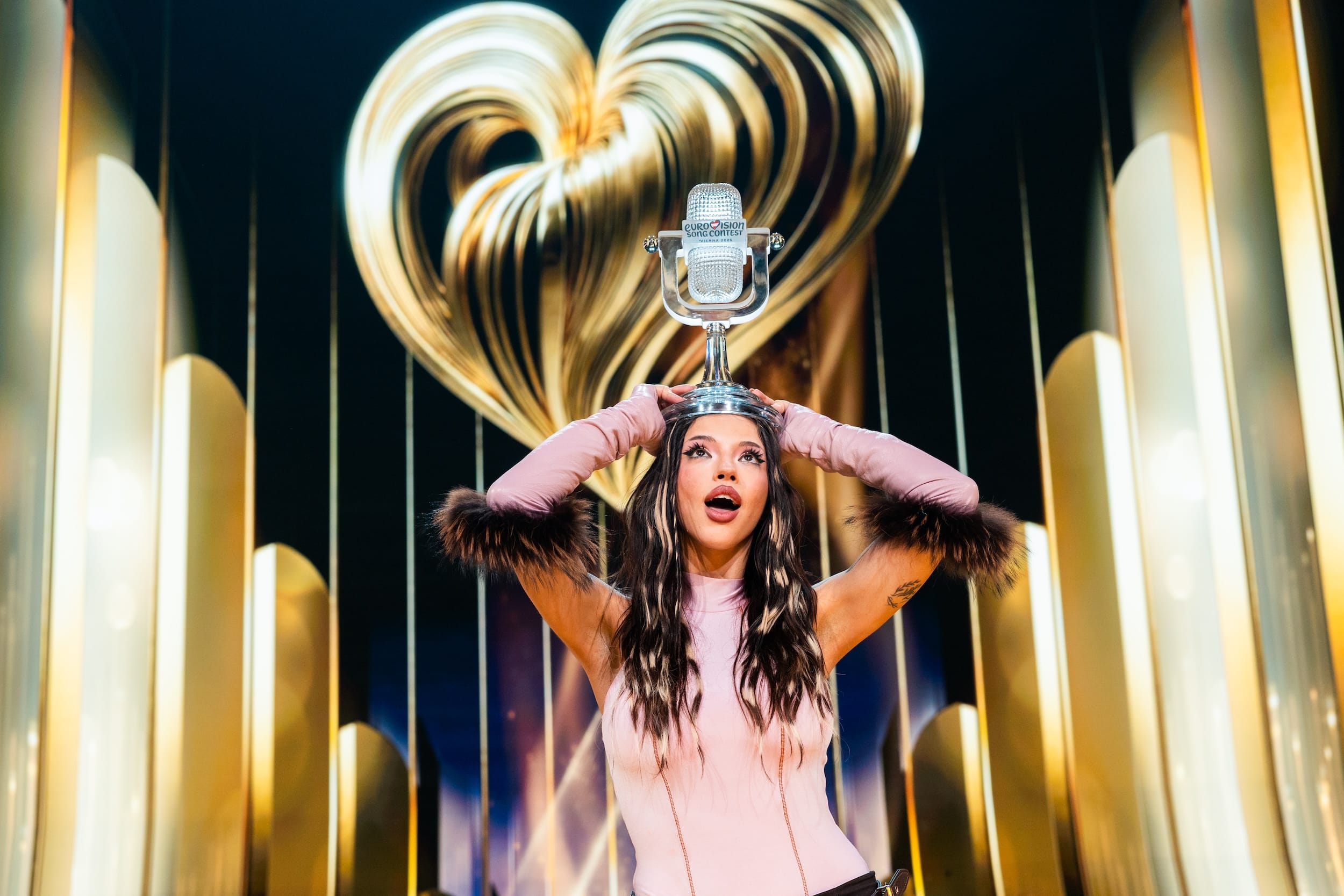
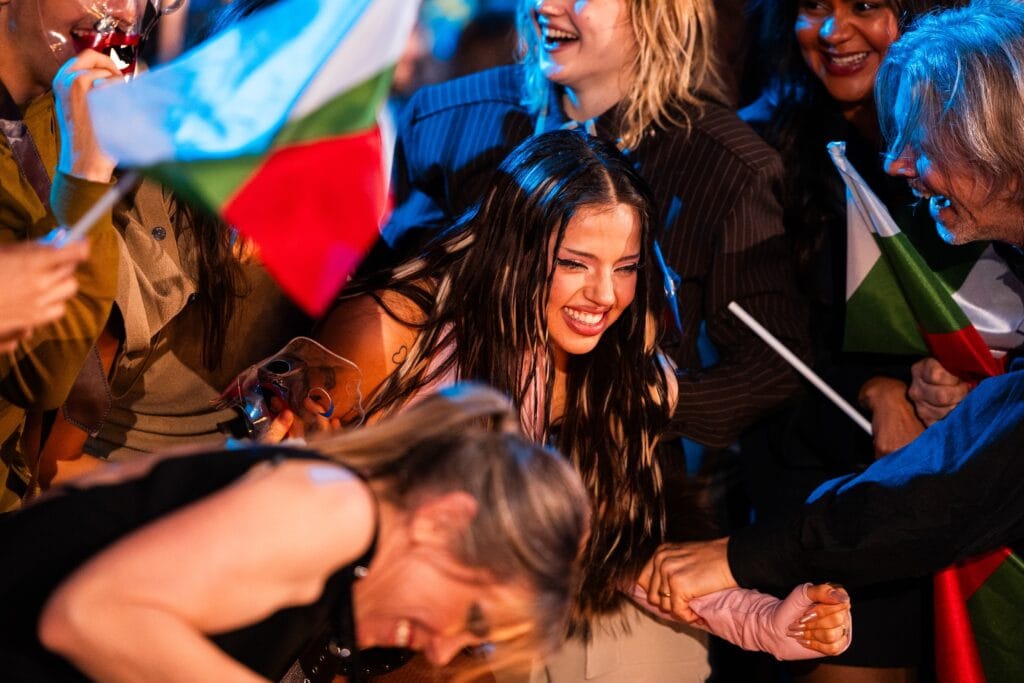
“Welcome to the riot.” Eurovision 2026 concluded Saturday night in Vienna, and the Grand Final winner, Bulgaria’s “Bangaranga,” performed by Balkan pop star DARA, was a dark horse. While gaining traction online in the lead-up (over 8 million TikTok views in as many days), what unfolded during the actual competition was a stunning display of high-octane performance. The infectious pop confection with the earworm hook—”Bangaranga, Bangaranga, Bangaranga, I’m the Bangaran!”—could give the team a global hit and song of the summer that goes way beyond the competition’s top prize. And then you look up the word.
Bangaranga is a Jamaican patois (patwah) phrase that’s taken on several meanings since its emergence in the 1930s — a commotion, an uproar, a happy riot. It became the Lost Boys’ battle cry in Steven Spielberg’s 1991 film Hook; Skrillex drew from that film explicitly for his EDM hit “Bangarang” (2011); and now, over a dozen years later, it’s been claimed again by a Bulgarian artist and a group of songwriters with no Caribbean roots. The word doesn’t belong to any of them. Worth noting before the chorus takes over.
Welcome to the riot. But whose?
The song plays with structure: pre-chorus, addictive hook, seductive tempo slow-down, all by the one-minute mark. The verse follows with hypnotic repetition:
I’m an angel,
I’m a demon,
I’m a psycho for no reason,
I’m a mover, I’m a teaser,
I don’t follow,
I’m the leader
The song evokes everything from Shakira’s “Waka Waka” to The Pussycat Dolls’ “Jai Ho” — artists who have each navigated the terrain of cultural borrowing, with varying degrees of accountability—though slightly more unhinged. DARA delivered a kind of pop exorcism, drawing from Gaga’s “Mayhem.”
What’s incredible: DARA performed the song in February, and the staging served generic pop, like wannabe Dua Lipa. But at Eurovision 2026, the team completely reimagined it into controlled chaos. Exceptional choreography with a few chairs, shot tight like an MTV-era music video—the staging was the perfect move for social virality. Simple fur and mask elements evoked Bulgarian folk imagery, giving way to a full focus on performance and storytelling.
The result? A Eurovision electronic dance banger. No glitz necessary. DARA gave the performance of the contest. The song will be everywhere this summer. And the conversation around it is just getting started.
Have another minute?
Books – From Jay-Z to Springsteen: 5 musician memoirs & where to see them perform live
Interview – ‘Hacks’ star Carl Clemons-Hopkins is nobody’s sidekick in ‘The Balusters’
Art – Fridamania: Why 2026 is Frida Kahlo’s biggest year yet

It wants better content.