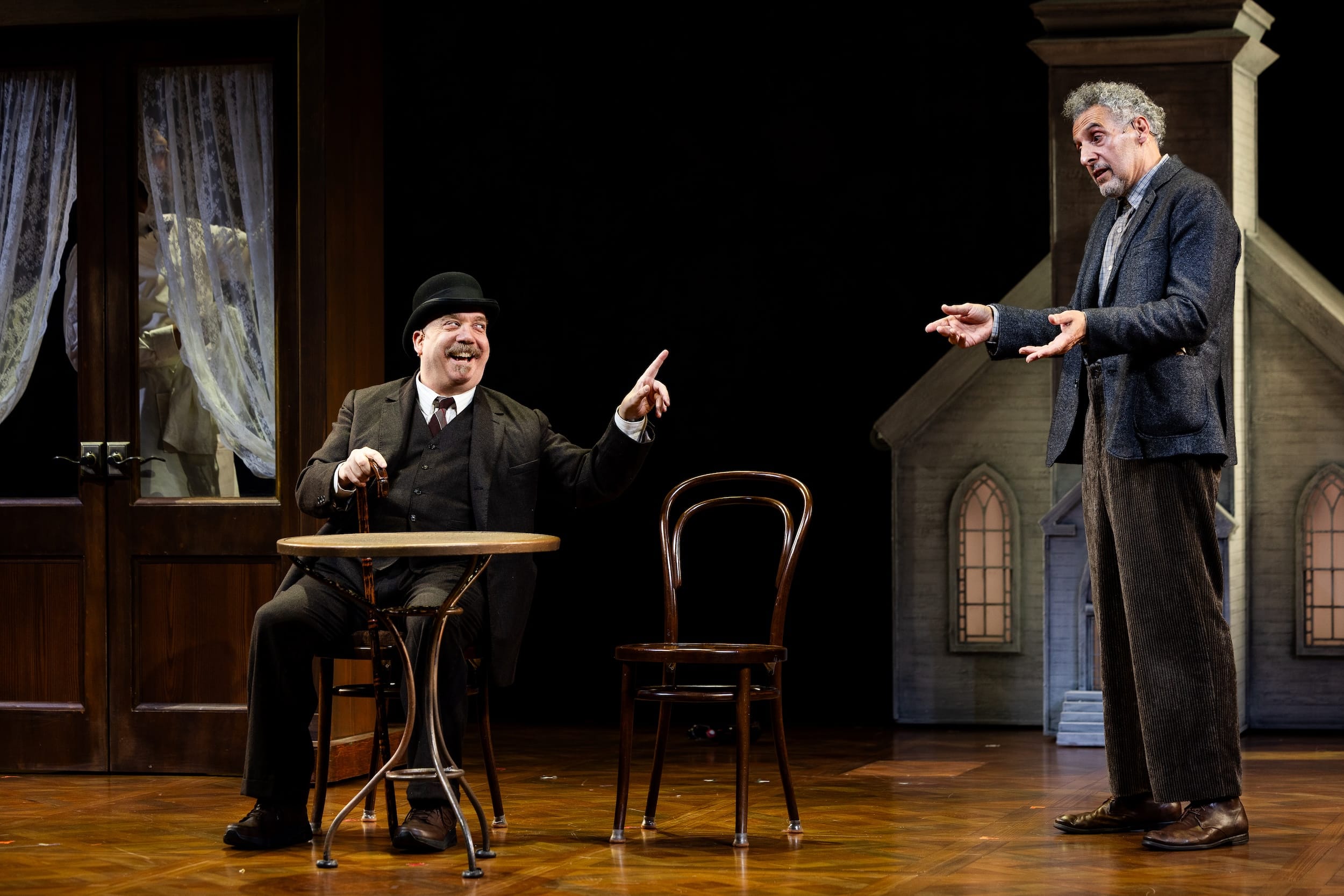

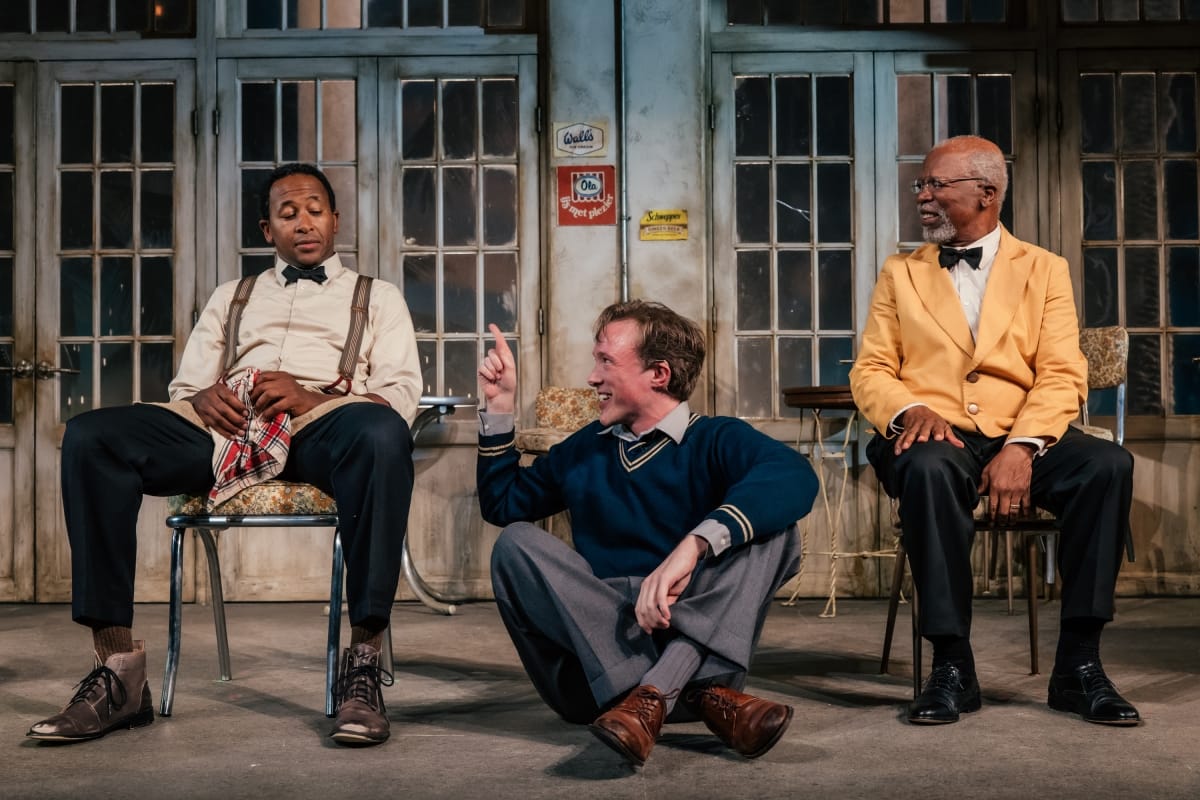
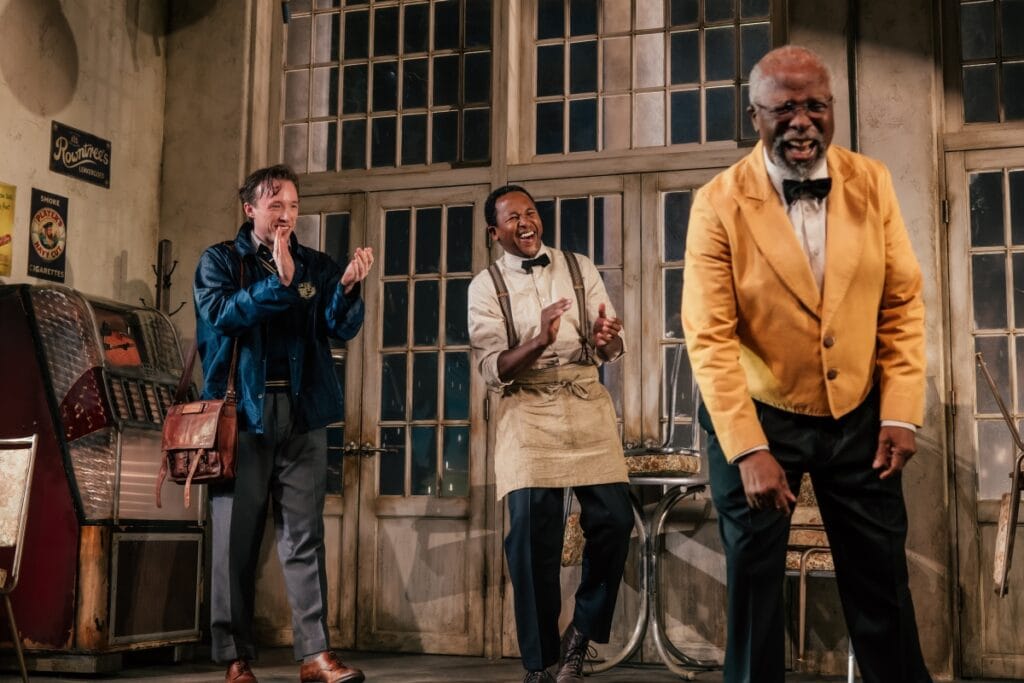
Two Black waiters weave between the tables of a South African tea shop, careful of each other’s movements, careful not to collide. In Athol Fugard’s “Master Harold”… and the Boys, that dance is an act of care and equality. The apartheid-era play, now at L.A.’s Geffen Playhouse, offers a poetic interrogation of racism’s most intimate repercussions.
The year is 1950, and 17-year-old Hally (Ben Beatty) arrives after school to discover Sam (John Kani) and Willie (Nyasha Hatendi) engaged in the jubilant scene. Even though he’s white, Hally considers Sam and Willie family. The trio reminisces on their adventures as Hally awaits news of his father’s medical condition, imagining a world of equality mapped onto a ballroom dance floor. A few phone calls from his mother later, Hally’s world implodes.
The steps we learn from the fathers we choose
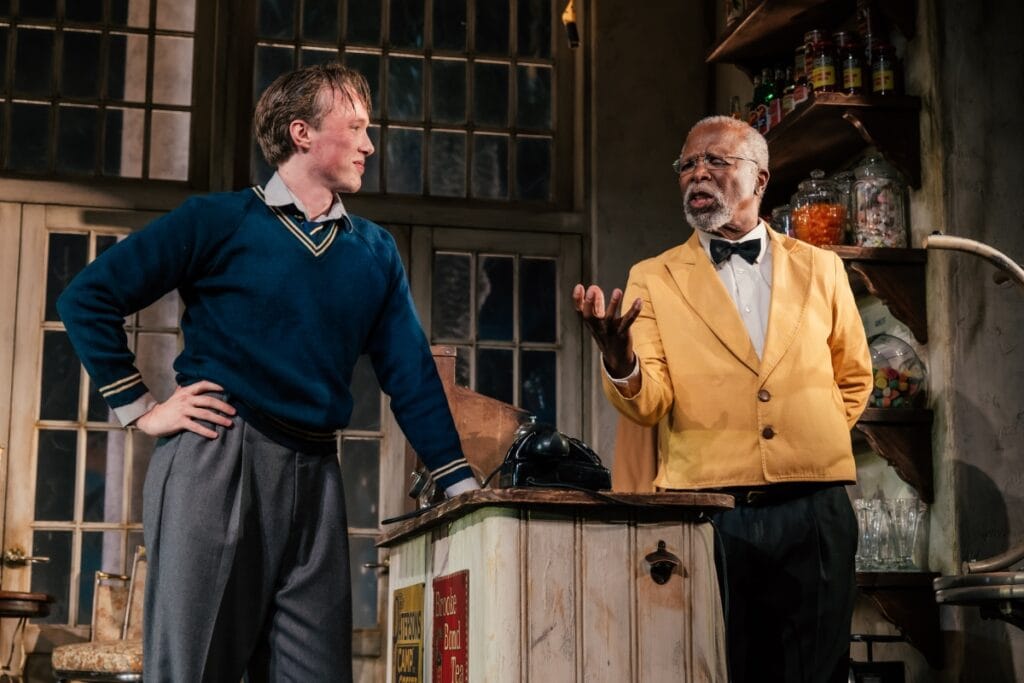
Fugard strings together memories that quietly reshape who we assume each character to be. As Hally reminisces with Sam, it becomes clear that Sam has taken on a paternal role. Meanwhile, Hally’s birth father has been drinking away his days. Their bond feels unbreakable, but Fugard reminds us that racism knows no bounds.
Emily Mann and Tarell Alvin McCraney’s co-direction brings these stories to life, layering dialogue with physical poetry. Through dance—co-choreographed by Koko Iwasaki Nyemchek and Kiki Nyemchek—and shifting power dynamics, the direction pits fatherhood against the weight of racial segregation.
Beowulf Boritt’s scenic design immerses the shop in changing weather, shifting from rain to sunset as the emotional climate darkens. Hally’s desire for power creates an irreparable chasm between him and the man who made it his duty to teach him what it means to be one. The books passed between the two quickly turn to fists in a heartbreaking fallout.
Kani, who played Willie opposite Matthew Broderick in the 1984 film, now inhabits Sam with four decades of earned wisdom. His performance channels each devastating blow into poignant moments of stillness and intention. He commands your attention at his character’s highest and lowest. Geffen Playhouse’s production rattles your bones and reminds today’s American audiences that racism isn’t sanctioned to a specific location or timeline. Its repercussions are inevitable, and all we can hope for is a dance floor free of collisions, with bodies moving in sync.

It wants better content.
Is ‘”Master Harold” …and the Boys’ worth seeing?

Fugard’s dance between chosen fathers and inherited racism becomes something bone-deep at the Geffen, carried by a performance from John Kani that commands every corner of the room.
- Geffen Playhouse, 0886 Le Conte Ave, Los Angeles
- Notable performers: John Kani, Ben Beatty, Nyasha Hatendi
- Running time: 95 minutes, no intermission
- Performances through May 10, 2026
Have another minute?
Regional Theater – Tarell Alvin McCraney’s new play Windfall premieres in Chicago
Broadway – In ‘The Balusters,’ the real threat to the neighborhood is the neighbors