
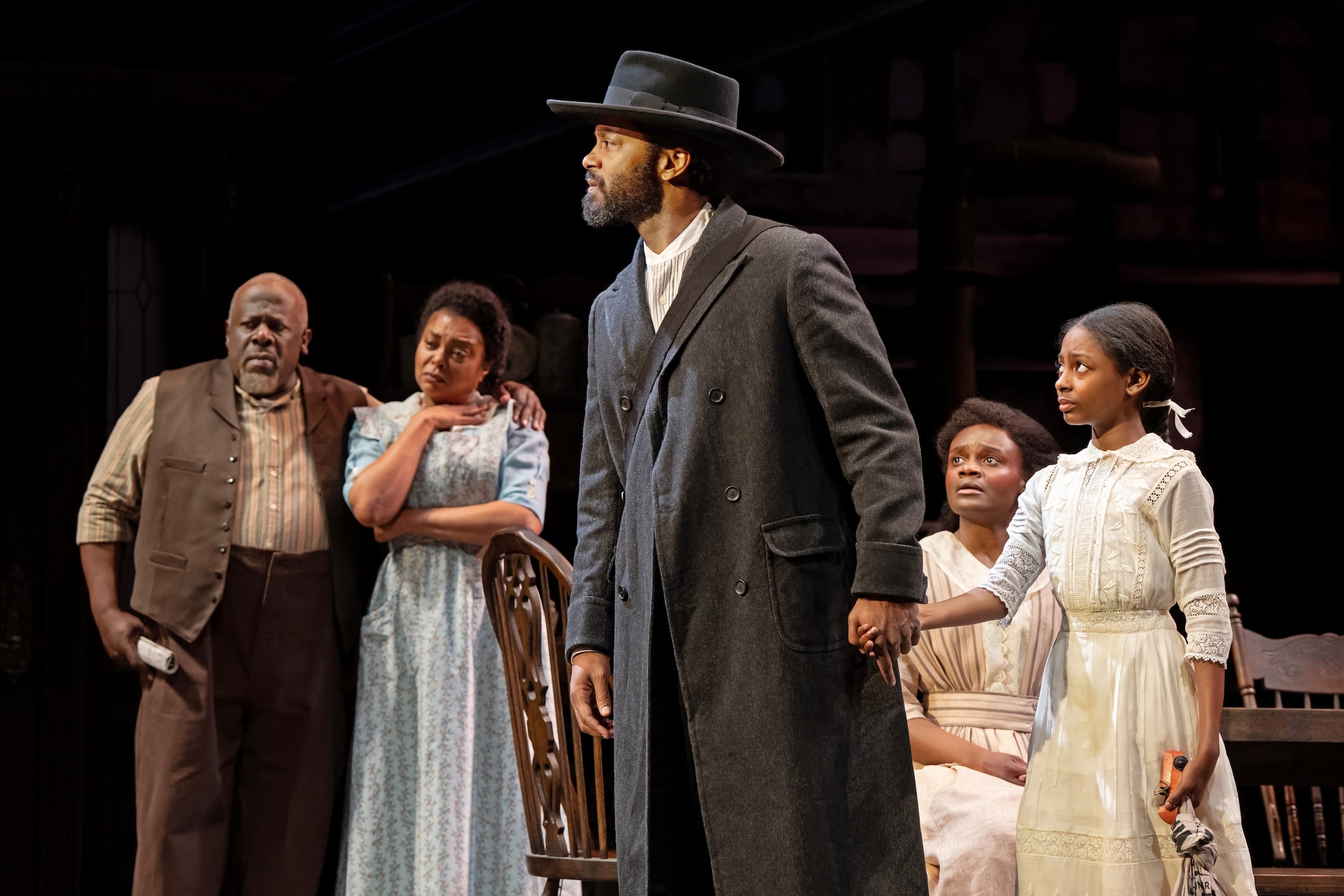
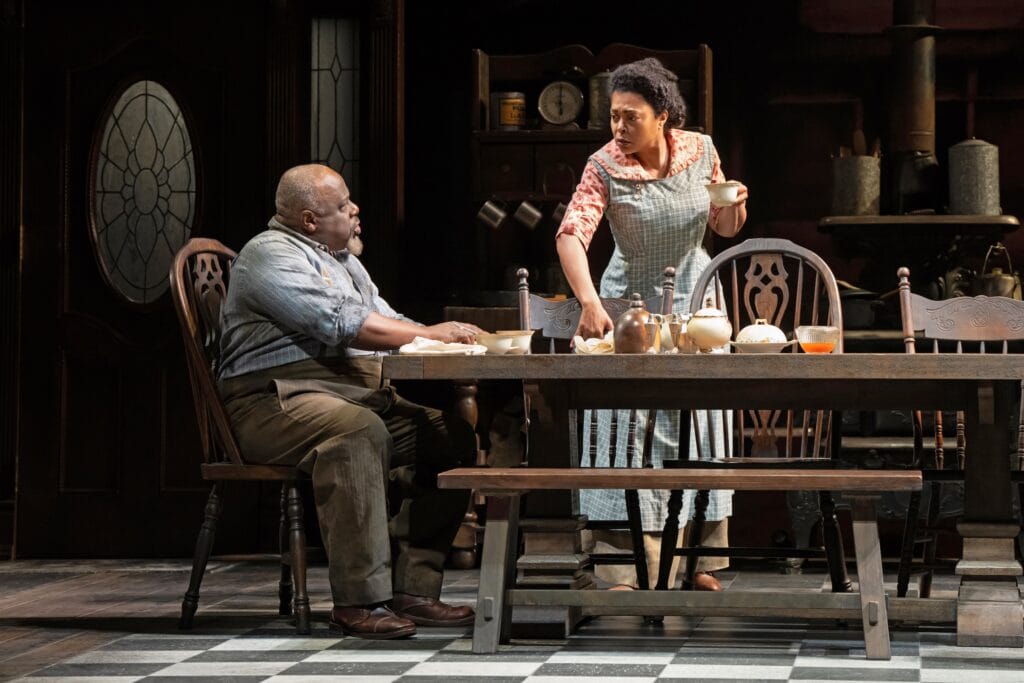
“When you look at a fellow, if you taught yourself to look for it, you can see his song written on him,” says rootworker Bynum Walker to newly arrived fellow tenant Herald Loomis. The year is 1911, and playwright August Wilson welcomes us into the world of a modest but “respectable” Pittsburgh boarding house. Audiences will likely flock to see Cedric “The Entertainer” and Taraji P. Henson as landlords Seth and Bertha Holly in Joe Turner’s Come and Gone—but it’s Wilson’s words that sing, confirming the late playwright as one of the most formidable voices of the 20th century.
Debbie Allen directs the play’s third Broadway outing with a touch that honors Wilson’s deft command of language while occasionally overcomplicating the play’s mysticism. Joe Turner’s Come and Gone is part of Wilson’s American Century Cycle, which explores the African American experience across each decade of the 20th century.
The play dismantles the generational trauma of the first wave of the Great Migration, which saw millions of Black Americans leave the South for new opportunities. But escaping racism is more complicated than crossing state lines.
Freedom’s unfinished business
Loomis (an explosive Joshua Boone) arrives after serving seven years on Joe Turner’s illegal chain gang. Separated from his wife, Martha (Abigail Onwunali), and traveling with his young daughter (Savannah Commodore), he arrives at the boarding house in search of his wife but, more importantly, his identity as a free man.
As Walker, the resident “Binding Man” with the ability to reconnect people with their souls, Ruben Santiago-Hudson captivates. Loomis, though, is skeptical of his powers, culminating in a bloody self-reclamation. Allen’s peripheral slow-motion staging in this pivotal climax feels unnecessary when Wilson’s words do the heavy lifting. Sluggish scene changes and abrupt light cues (lighting design by Stacey Derosier), perhaps meant to jar, feel unresolved rather than intentional.
If you’re still wondering about Henson and Cedric “The Entertainer,” they’re terrific. Ultimately, though, it’s not their play, despite above-the-title billing and final curtain-call bows. Any chance to see an August Wilson play onstage is one worth taking, even if this production ocassionally gets in its own way.

It wants better content.
Is ‘August Wilson’s Joe Turner’s Come and Gone’ worth seeing?

Even when the staging overreaches, Joe Turner’s Come and Gone knows how to find its way home.
- Ethel Barrymore Theatre, 243 W. 47th Street, New York City
- Notable performers: Taraji P. Henson, Cedric “The Entertainer,” Joshua Boone, Ruben Santiago-Hudson
- Running time: Two hours and 20 minutes with one intermission
- Performances through July 26, 2026